Pallejà

Pallejà

A només uns minuts de Barcelona, Pallejà combina un ric entorn natural amb més de 2.000 anys d’història.

Parades imprescindibles

The Llobregat River Park. Pallejà

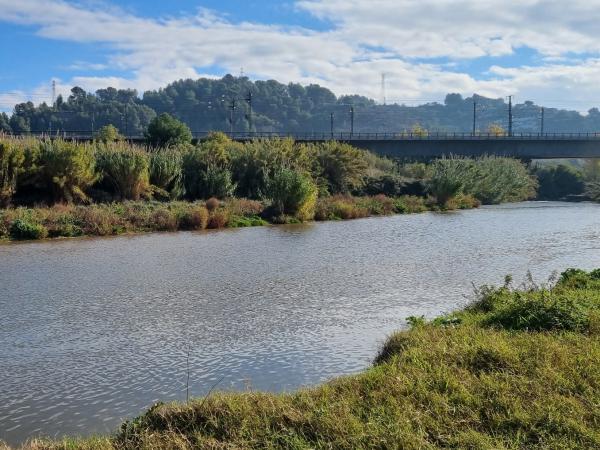
Parc Fluvial de Pallejà

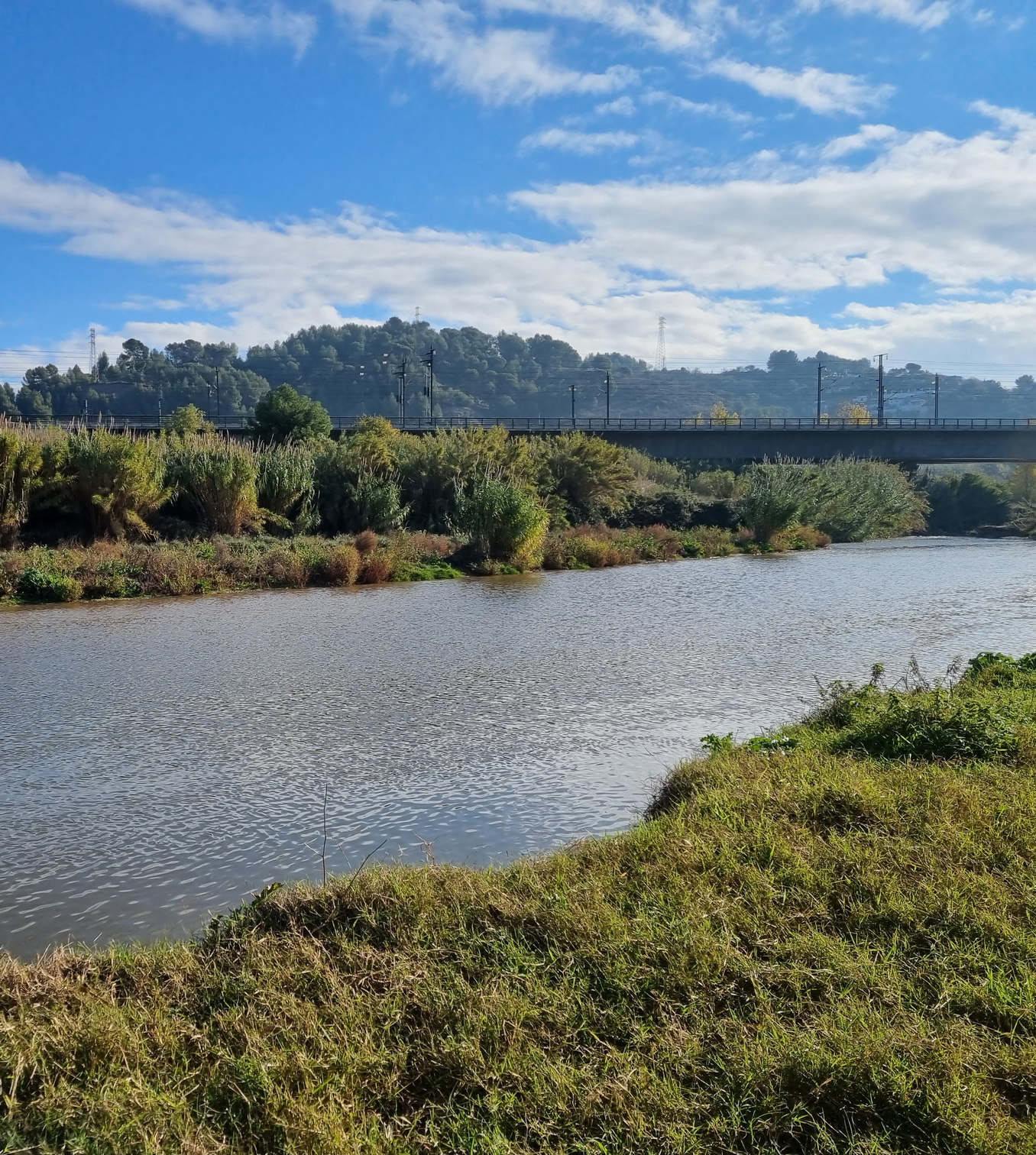
The Llobregat River Park in the municipality of Pallejà is helping to gradually recover the riverside ecosystem and has also allowed the gradual recovery of the link between the Llobregat River and the inhabitants of Pallejà.

The Llobregat River, as it passes through Pallejà, is in its lower section, before its mouth. Around this section lies the main alluvial plain of Catalonia, the Llobregat Delta, some 98 km² of high interest for the diversity of water birds, since the delta is in the middle of the Western Mediterranean migratory route.

The population has always had an important link with the river. Decades ago, it was common to see entire families spending their afternoons by the river and having their meals there in contact with nature.

A visit to this natural space, so close to the urban centre, allows you to enjoy a walk, do sports, or observe numerous species of birds on the riverbed. The river space now constitutes an area for leisure and for practicing sports and is also an unbeatable setting for learning about an important part of the natural environment of our municipality.
Més informació
Natura Pallejà
_DSC1719 copia.jpg

Font de les Rovires

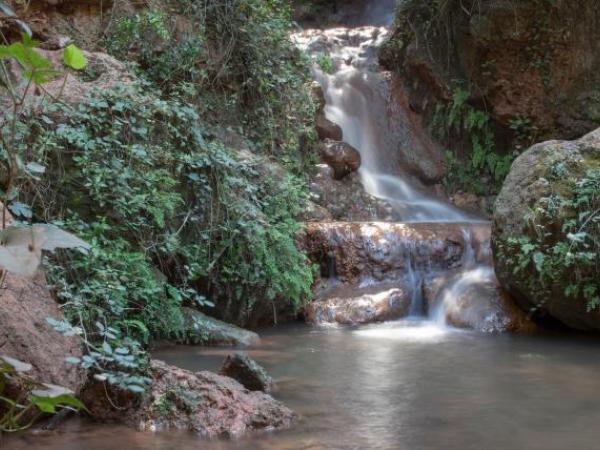
The Font de les Rovires is located in the natural area of ​​Les Rovires, well-suited and arranged for the recreation of the people of Pallejà. It is located next to a waterfall that is located above it, a wooden bridge that crosses the Les Rovires stream, and a wooden table with benches, all perfectly arranged and arranged with wooden stairs and railings.

The fountain is tucked away on the side, below the steps that go up to the waterfall. It is a small stone wall tied through, which the water flows through an iron spout and falls into a square sink that rests directly on the ground. On the left side, we find a stainless steel City Hall sign with the name of the fountain engraved in black letters.

If you are interested in biology and if you like to differentiate trees and plants, you will spend an entertaining time here. Next to the fountain, there is a picnic area, which becomes ideal considering this environment.

To get there, you have to follow the cemented path for just 100 m past Can Coll until it ends. At this point, you have to continue on the right along the dirt forest track. After just 40 m, you will find the Font del Carinyo, another of the town's attractions, which you have to leave behind and continue along the wide, flat reddish dirt track in a northwesterly direction for another half a kilometre. Once here, there are signs pointing to the source; you have to turn right and go down a steep, heavily eroded path due to the passage of water that leads, 75 m further down, to the Font de les Rovires.

Més informació
Natura Pallejà
_DSC1719 copia.jpg

Font del Carinyo

The Font del Carinyo in the municipality of Pallejà is a unique natural environment for walking and has been a meeting point for the people of Pallejà since the 20th century. Its history is linked to the marriage of the former owners of the estate, Mr. Seix and Mercè, because this fountain is a gift that Mr. Seix gave to his wife to improve her health.

It is part of the old romantic garden of Can Seix, with a large pond 10 m in diameter and 1.5 m deep. It is not a natural spring, since the water flows from the tanks that the Seix family had built to collect the water that flows from the Presa de l'Aigua, at the top of the Toscos stream, in the Les Rovires sector, another point of natural interest.

In the pond, water lilies and yellow lilies can still be found, which contribute to the reproduction of a large number of species, such as the tree frog, the green frog, the toad, or the salamander. Dragonflies and other aquatic invertebrates can also be easily seen.

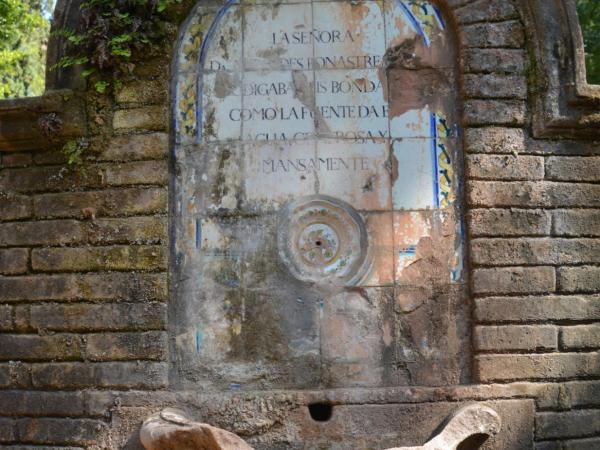
The fountain is part of the pond and emerges from its contour. The front wall is made of exposed brick, rounded at the top. In the middle there is a ceramic tile panel, very worn and damaged by the passage of time, where, in addition to the name of the fountain, this phrase could be read: "La Sra. Mercedes Bonastre que prodigaba bondad como la fuente da el agua que fluye mansamente". Below, there is a semicircular stone basin that collected the water. Today, part of it is missing, and the spout through which the water flowed has disappeared, and only the hole remains.

The environment is ideal for walking surrounded by plane trees, and it is also a space where several species of birds are still found, such as the grey flycatcher, the greenfinch, the blackbird, the raspinell, the green woodpecker, the great tit, or the red-footed sparrow.

Més informació
Natura Pallejà
Ruta BCIL per Sant Vicenç dels Horts

Ruta "Els enigmes de Pallejà"

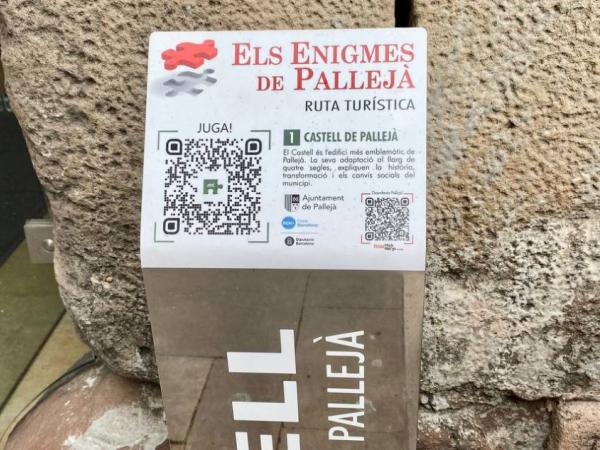
The route "Els Enigmes de Pallejà" is an initiative of the Pallejà City Council to promote its magnificent architectural and historical heritage, while you can enjoy a fun activity to visit and get to know Pallejà.

A walk to learn about the heritage and history of the municipality

You can walk through its streets and buildings and solve the proposed puzzles with the information that you can capture on your mobile device using QR codes marked at each point.

The route begins at the Castle, and continues around the Plaça Major, the City Council building and the Plaça de les Masies area. Then, it continues through Can Daunis and Ca l'Obianc, to head towards Plaça de l'Estació, the church and, finally, ending at Ca n'Albareda. In each of these locations, an information totem has been installed with a QR code through which, with your mobile phone, you can participate in a game created with the aim of spreading all the details of the town's historical heritage.

During the route you will learn about historical events, such as those of the Peninsular War, or the history and transformation of Pallejà up to the present day.

Més informació
Visita Pallejà
museu municipal pallejà

Museu Municipal de Pallejà

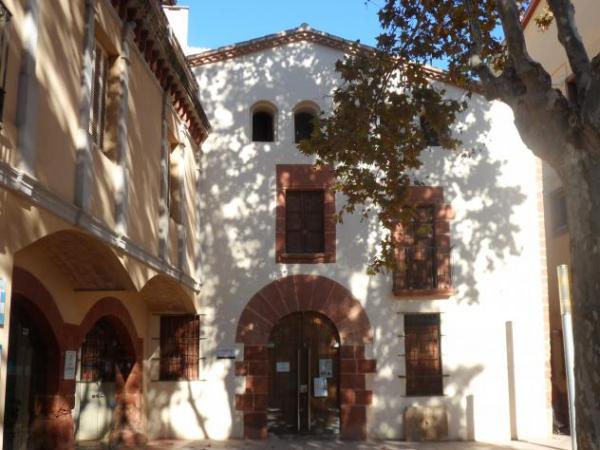
També conegut com a Masia Museu, es troba situat a Ca l'Albareda de la Plaça, una casa construïda el 1615. Exposa una notable selecció d'objectes antics d'ús quotidià, en un recorregut per les diverses estances, que es conserven com dos segles enrere.
 

El Masia Museu-Museu Municipal de Pallejà ocupa l'antiga Ca l'Albareda de la Plaça, una masia construïda el 1615 sobre les restes d'una casa anterior i que actualment se situa dins el nucli urbà de Pallejà. Visitar-lo permet descobrir la tradició agrícola d'aquesta població, que avui dia forma part del cinturó industrial de Barcelona.

Les dues plantes de la casa conserven les diverses estances tradicionals, com el menjador, la cuina i el celler, així com un dormitori, una habitació de costura i l'oratori. Estan perfectament ambientades en diverses èpoques, entre finals del segle XVIII i principis del segle XX. S'hi poden veure nombrosos objectes, estris i eines antics.

Més informació
Visita Pallejà

Restaurants

I si has fet gana...

Fes un cop d'ull als restaurants que trobaràs a Pallejà