Què et ve de gust?
Agafa la línia FGC al teu punt més pròxim i viu una escapada plena de descobertes al Baix Llobregat.
Tour RCDE Stadium
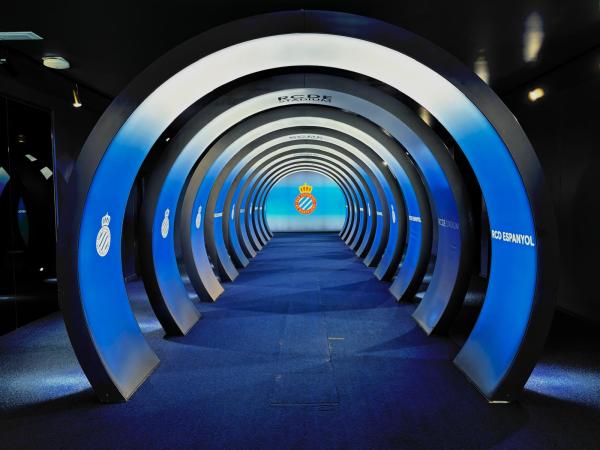
The RCDE Tour offers you the chance to relive the magic of the RCDE Stadium, learn its secrets and understand the history of a club with 123 years full of unforgettable moments.
The tour route is divided into three main blocks:
1. Visit to the Stadium
In this tour we will walk through our facilities and show you unique areas of one of the most modern facilities in Europe. Have you ever imagined what it would be like to be a coach? To speak during a press conference? To be able to be inside the first team's dressing room? Or what it is like from a box? Without a doubt, you will live an experience that will bring you closer to the world of soccer and you will feel the same as the players of the first team!
2. Historical space
The Tour also includes a memorable museum. A stage where all the trophies, badges and awards that the club has won during its long history are gathered. The room is a memorial of the sports sections that the institution had some time ago, apart from the fact that there is also a space dedicated to grassroots and women's soccer. All this, thanks to a timeline that tells the trajectory of Espanyol. In addition, in the tunnel that goes from the locker room to the mix area, you can find an exhibition of jerseys from all eras that the players wore on the pitch. Relics of the Blue and Whites' past. Finally, in the extraordinary Juan Segura Palomares Auditorium, where the press conferences take place, there are photographs with the portraits of all the coaches who have defended our colors, as well as the international players with the Spanish national team who have been called up while they were Espanyol players.
3. Audiovisual room
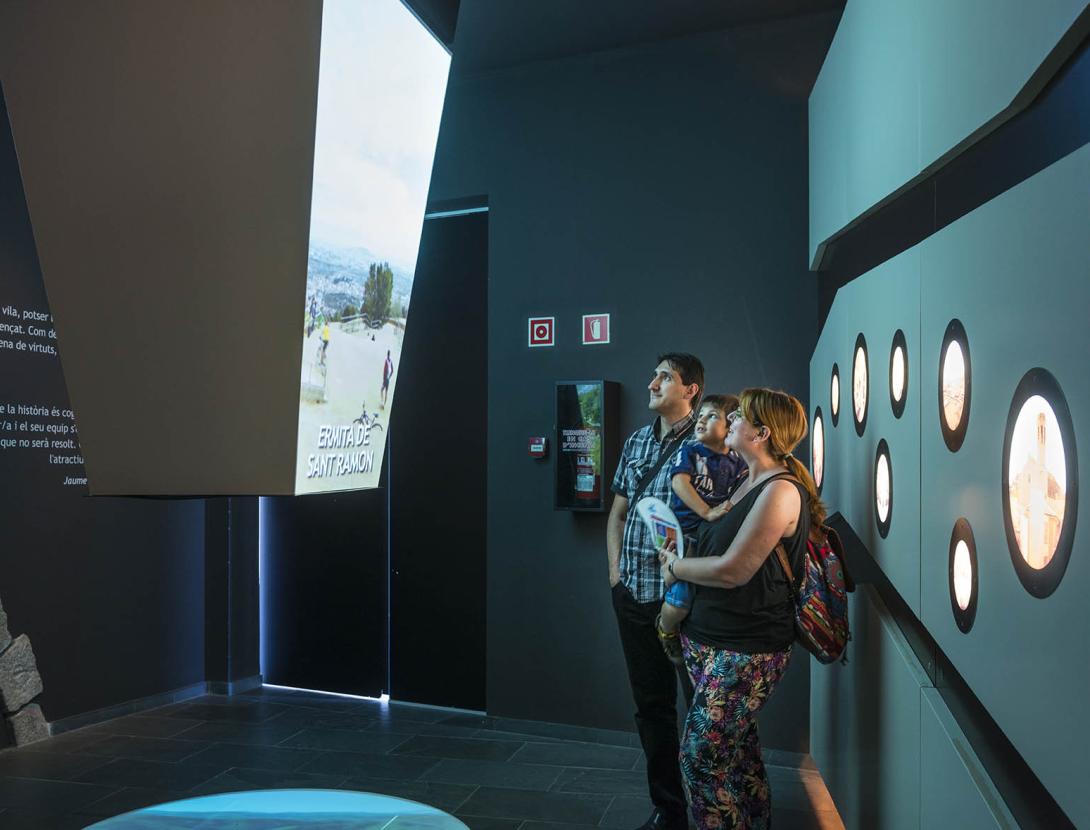
The Executive Room of the Stage Front Stadium contains an exclusive space where you can experience an immersive 360-degree experience. Through three questions (Who are we? What do we believe in? How did we get here?) the video tells the story of Espanyol through its people, its achievements and its philosophy. The meeting point is the stadium reception, in the Club offices. Important: Tickets once purchased cannot be cancelled except for the Club's own reasons.
Ruta del patrimoni
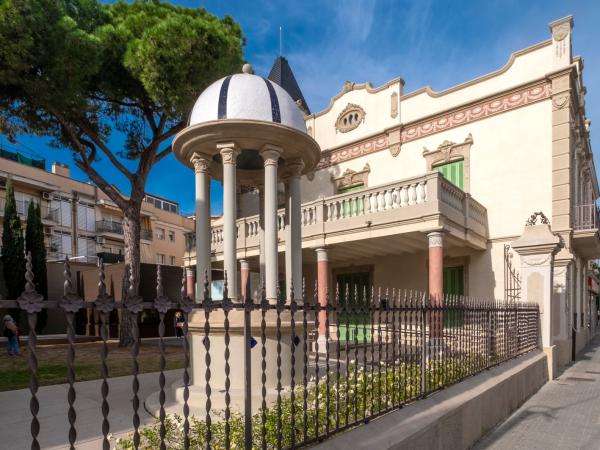
The BCIL route is a pleasant walk through Sant Vicenç dels Horts that shows us 10 areas of the municipality declared Cultural Assets of Local Interest.
The spaces that we can find in this route are:
- Can Comamala
- Mill of the Friars
- Roman baths
- Pi Gros Park
- Ca l'Aragall
- Can Reverter
- Can Costa
- Santa Eulàlia House
- Parish Church
- Catwalk Pillar
A walk to enjoy and get to know the town
Sant Vicenç is a municipality with a heritage that reflects its evolution. The mosaic of buildings and surroundings offered by the route aims to show the diversity of historical periods, architectural styles or social environments that have been around the town of Sant Vicenç since ancient times.
If you want to enjoy nature you can visit the Pi Gros park, a large forest area of more than 20 ha. where various species of Mediterranean trees grow, such as the Scots pine, a century-old tree that gives the park its name. The path of the Font de Sant Josep is a walk that connects the city center with the terraces of the park.
Muntanya de Sant Ramon
Located near the coast and the Llobregat delta, its forest is the typical Mediterranean formed mainly by pine trees and holm oaks.
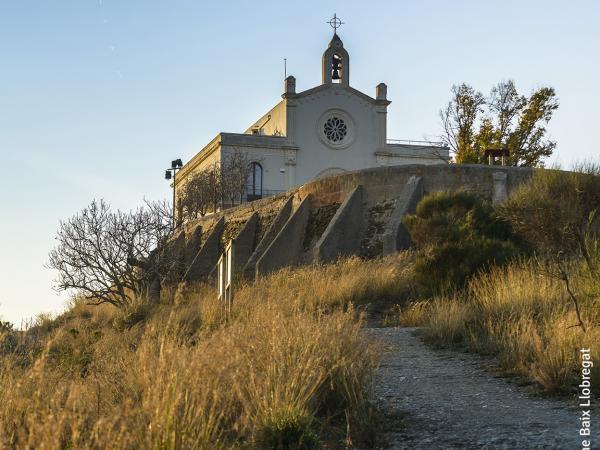
Almost 300 meters high on the mountain of Sant Ramon, they are crowned by the hermitage dedicated to the saint that gives it its name and dates back to 1887. Given its height, the peff of the hermitage, which makes both Especially the mountain, it is visible from all the Llobregat delta.
The mountain of Sant Ramon, located near the coast and the Llobregat delta, is a privileged place for the observation of migratory birds. The season that concentrates most birds is the months of September and October, during which you can see hawks, milans, eagles or storks. The sedentary fauna of the Montbaig Forest Park is made up of mammals such as common squirrels, genets, wild boar and hedgehogs, as well as owls, gamarusses and kelp trees.
Font de les Rovires
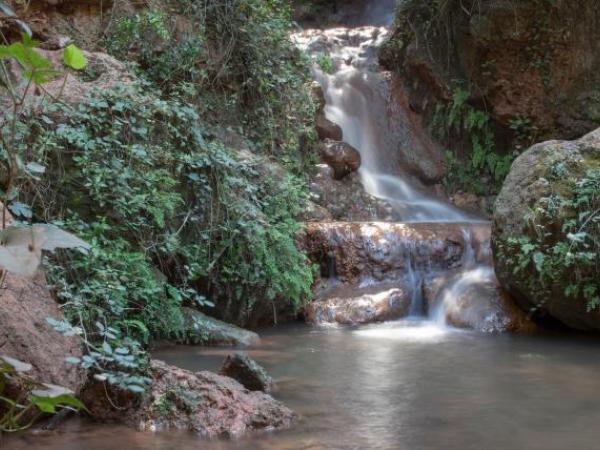
The Font de les Rovires is located in the natural area of Les Rovires, well-suited and arranged for the recreation of the people of Pallejà. It is located next to a waterfall that is located above it, a wooden bridge that crosses the Les Rovires stream, and a wooden table with benches, all perfectly arranged and arranged with wooden stairs and railings.
The fountain is tucked away on the side, below the steps that go up to the waterfall. It is a small stone wall tied through, which the water flows through an iron spout and falls into a square sink that rests directly on the ground. On the left side, we find a stainless steel City Hall sign with the name of the fountain engraved in black letters.
If you are interested in biology and if you like to differentiate trees and plants, you will spend an entertaining time here. Next to the fountain, there is a picnic area, which becomes ideal considering this environment.
To get there, you have to follow the cemented path for just 100 m past Can Coll until it ends. At this point, you have to continue on the right along the dirt forest track. After just 40 m, you will find the Font del Carinyo, another of the town's attractions, which you have to leave behind and continue along the wide, flat reddish dirt track in a northwesterly direction for another half a kilometre. Once here, there are signs pointing to the source; you have to turn right and go down a steep, heavily eroded path due to the passage of water that leads, 75 m further down, to the Font de les Rovires.
Parc del Canal de la Infanta
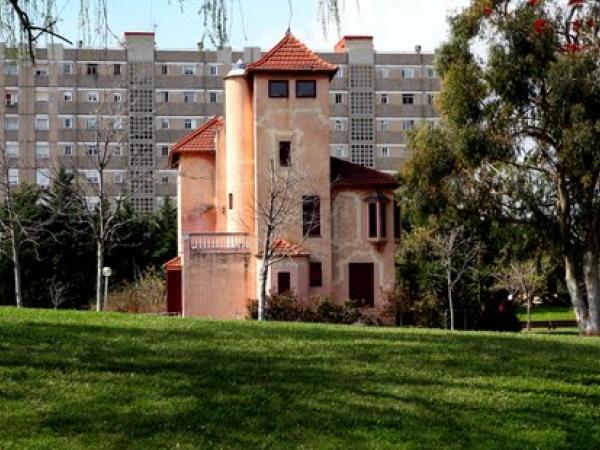
It is a very open and very sunny park, with parterres of green meadows and trees of great dimensions. One of the paths that cross it leads to a higher area where the park can be seen from another point of view. In the park we find the Camprubí house, built between 1927 and 1928 by the architect Josep Mª Jujol Gibert.
In addition, the Environmental game offers a lot of proposals to enjoy in family and know the values of the metropolitan parks, the nature and the environment through the game and the activity

Museu de les Aigües
Take a trip to the main drinking water pumping station in the Barcelona area and plunge into the world of fresh water in a contemporary museum housed in an industrial complex in the modernist style.
This museum is a cultural heritage and educational facility that seeks to spread knowledge about the integral water cycle. The building where the permanent exhibition is located was designed by the architect Josep Amargós y Samaranch in 1905, and consists of three naves: the Boiler Room, the Electricity Room and the Engine Room, which preserve the original machinery of the time, some, still in operation.
Permanent exhibition - Water: the impulse of the city
Do you want to know what is the path that the water makes from the river to your house? In the permanent exhibition you will see how technology and science have made that possible. Discover through the tools and hydraulic machinery and your own experimentation, the advances that have made possible the evolution of this valuable good, from ancient times to the present day.
On the occasion of World Water Day 2019, the new permanent exhibition is inaugurated: “Water: the impulse of the city”. This exhibition shows how technology has made it possible to take advantage of the power of water to accompany the growth of Barcelona as a reference to the world.
Gardens of the Museu de les Aigües:
The museum is surrounded by gardens with their own character, which have a jewel of modernism: the reconstruction of the Waterfall that was in the Casa Vicens, designed by Antoni Gaudí. For the reconstruction, the indications of the original project have been followed, adding a sustainability component so that the water is recycled.
LANGUAGES
Guided visits are in Catalan and Spanish languages. English and French guided visits prior reservation.
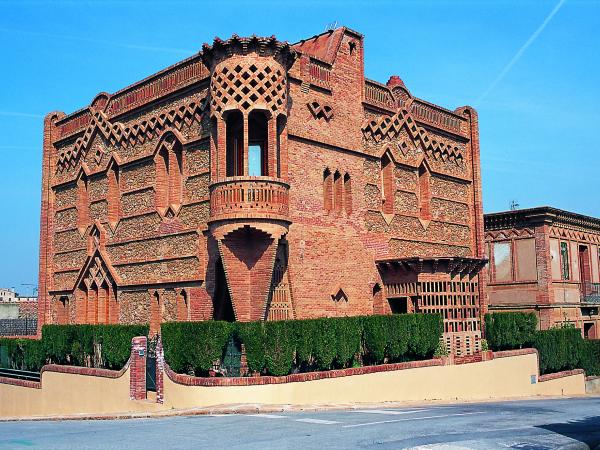
Colònia Güell
Colònia Güell is one of the best-preserved Modernist industrial colonies in Catalonia. Founded by Eusebi Güell, it was conceived as a community where workers had access to housing, services and facilities such as the school, theatre, athenaeum and parish centre, improving their quality of life.
The site stands out for its rich architectural heritage, featuring Modernist buildings designed by architects associated with Gaudí. A visit offers the opportunity to explore its streets and public spaces, discover the history of the colony and appreciate the cultural legacy that has made it a protected heritage site.
The visit culminates at Gaudí's Crypt, a masterpiece of Modernist architecture and a UNESCO World Heritage Site.
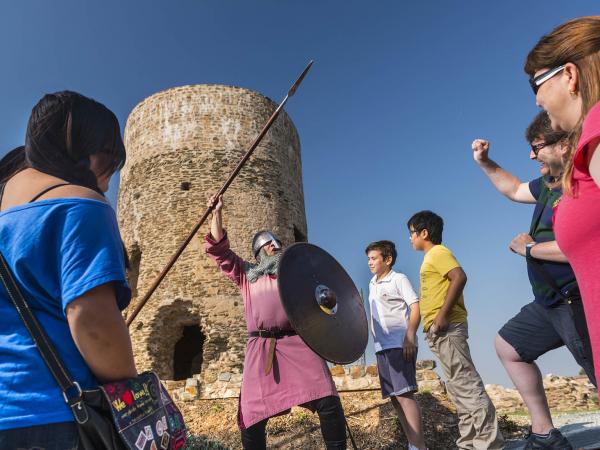
Torre Benviure
The medieval tower defense Benviure was built in the s. X to defend the city of Barcelona attacks from the kingdoms of Al- Andalus and, along with other buildings such as the Tower of Llor, the Salbana Tower, or the castles of Eramprunyà (957), Castelldefels (967) or Sant Boi (969) defined the space frontier with Muslim kingdoms known as the Marca Hispanica. Benviure tower was built on an ancient Iberian settlement. The building was located on a site of great strategic importance for the control of a large territory, which was the pre-coastal mountain range to the rich land of the Llobregat delta. It was also located at a major crossroads, north to south to Barcelona and Tarragona, which roamed old Roman roads, roads that were forming a network protected by the king, the royal road paths. With the advancement of the Christian reconquest of the peninsula, the territory began to repopulate the tower took character and residence of the lord of Benviure. The wooded and wild landscape led to the king Juan I spend hunting seasons in the tower.
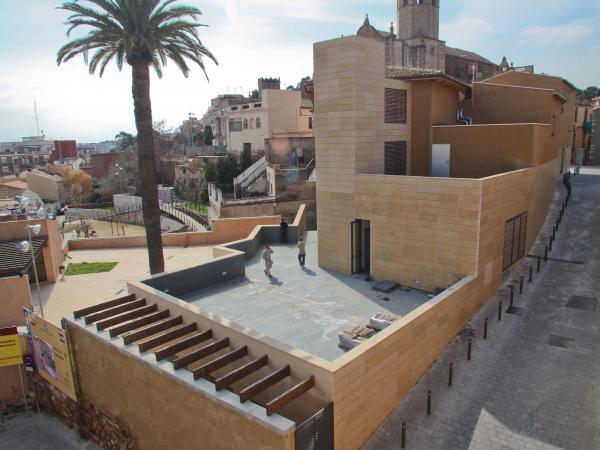
Museu Can Barraquer
Can Barraquer Museum. The new museum, located in Can Barraquer, a house of s. XVII was the family home where Rafael Casanova lived in the last years of his life.
It is the headquarters of the Museo de Sant Boi.
Located on the first floor Can Barraquer, the exhibition summarizes the local history from the Iberian period to the present, through the Roman era, the Medieval Ages and the modern and contemporary eras.
The collection comes from archaeological excavations and individual donations. The route takes advantage of the spectacular archaeological concentration of entry to locate the visitor on a journey through time.
Rafael Casanova and his time. This historical exhibition located on the second floor focuses on the figure of "conseller en cap" principal political office of Barcelona, Rafael Casanova, and makes an interactive recreation of the defense of the city from its walls.
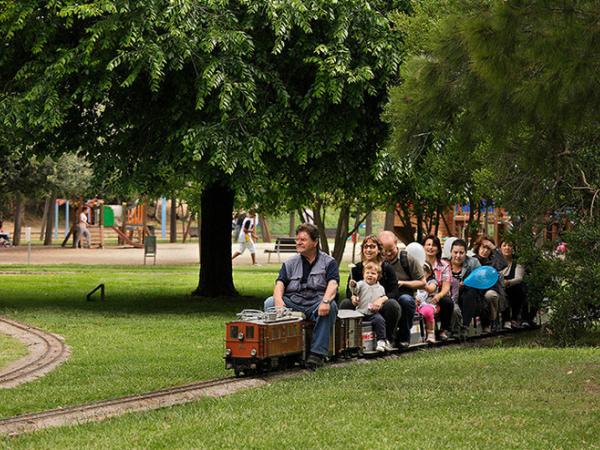
Parc de Can Mercader i trenet
The park of Can Mercader, the most important city in Cornellà de Llobregat, occupies everything formerly the gardens of the old Palace of the Families of the Merchant Counts and also of Bell-place. The Avenue of the Bananas is the main axis of the park: the crossing from the south to the north and configures, with the paths that create it, a series of spaces and environments for different uses. In the lower part there is the large esplanade of games with the train; Above, the lake, the gardens with glorieta and viewpoints, the paths, the living areas and the pool occupy the space of the old beams. In the central part, the structure of terraces and gardens has been maintained, which includes the two emblematic pieces of the park, the palace and the plataneda. The vegetation, which is denser in the central part, is formed by a large variety of species, among which there is a clear distinction, both for the number and its uniqueness, bananas, palm trees of the Canary Islands and the lavender palms.
Among many others, the main attraction of the park is the "trenet", which has become the symbol and the reclamation for thousands of visitors: a network of tracks through which miniature electric trains circulate, and that They offer the possibility, so small and large, to go up and enjoy a fun trip.
Inauguration: 1989
Surface area: 10.5 ha.
Service information
Historic-architectural landmark, unique vegetation, historic garden, lake, pond, drinking water fountains, miniature train, children's games, gymnastics, restaurant, bar, WC. Palau Mercader Museum and municipal swimming pool.
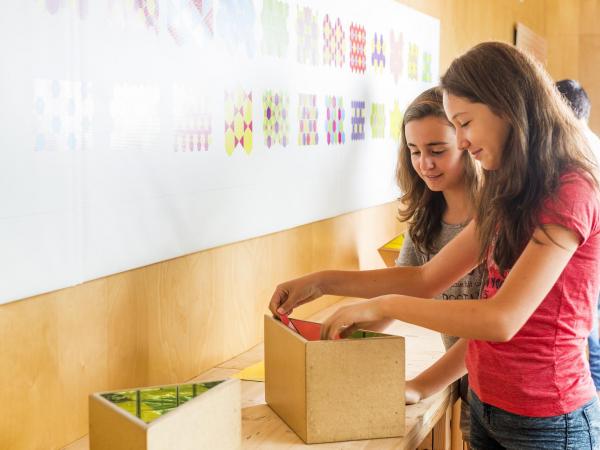
Museu de Matemàtiques de Catalunya
The Mathematics Museum of Catalonia is housed on the upper floor of the Palau Mercader Museum in Cornellà, an area of more than 300 m² featuring all manner of exhibitions and activities addressing mathematics from a practical and fun perspective.
The initiative was promoted by the Association to Promote and Create a Mathematics Museum in Catalonia (MMACA), and thanks the collaboration of Cornellà City Council it houses a permanent exhibition of the collection "Mathematical Experiences", comprising games, construction sets and a range of different elements divided into galleries dedicated to Geometry, Mirrors, Calculus and Statistics, Sets and Strategy, and Cartography.
The MMACA project aims to cover both fun and cultural aspects and also mathematical applications viewed with rigour and quality, supported by the fact that the Catalan mathematics scene boasts a large number of well-organised, innovative and active professionals, with a wide range of individuals in contact.
The fact that there is no other mathematics museum in Catalonia or Spain means that this project represents a great opportunity to bring together, blend, promote and structure a key aspect in the country's future: the role and vision of the world of mathematics and its social impact.
Meanwhile, the initiative is linked up with international projects emphasising the need to create settings outside school that will promote the learning and understanding of mathematics and science.
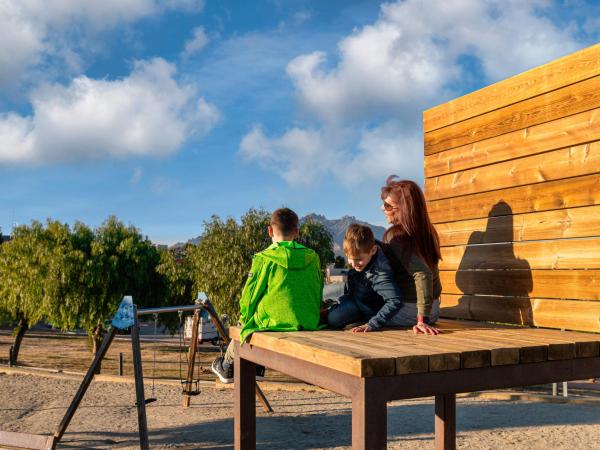
Els Set Balcons de Montserrat - Sant Esteve Sesrovires
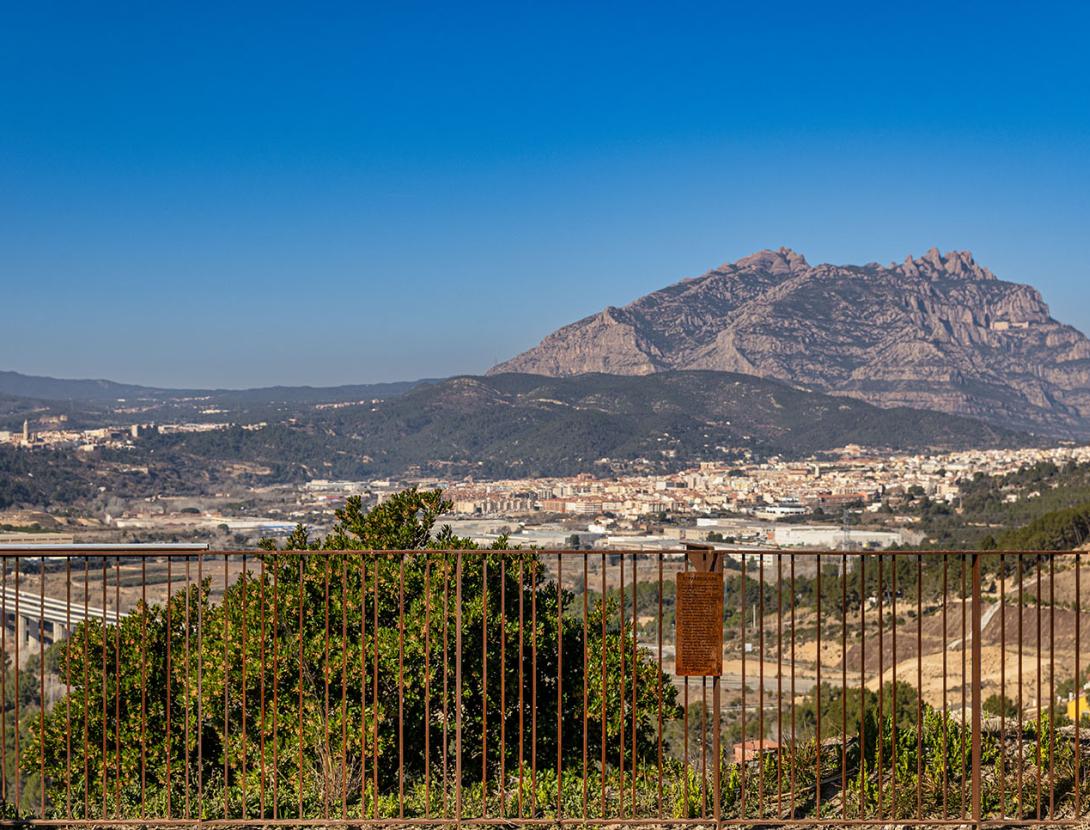
The Seven Balconies of Montserrat are seven natural and panoramic viewpoints of the magical mountain that contemplate it from Abrera, Castellví de Rosanes, Collbató, Esparreguera, Martorell, Olesa de Montserrat and Sant Esteve Sesrovires.
These viewpoints are the perfect place to enjoy nature and the activities that this northen area of Baix Llobregat offers, such as hiking, cycling or family tourism. At the same time, they allow you to enjoy gastronomy with native products, visits to wineries and cellars, a heritage that shows the past and the history of the territory, such as the Sedó Colony in Esparreguera or the Pont del Diable in Martorell, and unique events, such as the performances of the ''Passions'' during the spring.
More information about each balcony at www.setbalconsdemontserrat.cat
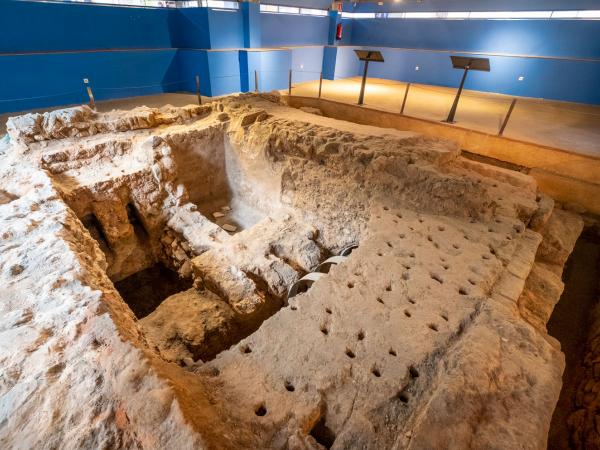
Forn Romà
It is documented that the surface of the Roman villa of Sant Vicenç dels Horts covered much of the subsoil of the historical center. One of the best studied spaces is the oven structures and complementary work rooms. The oven and workshop have been documented around the 1st century AD and were active for over a hundred years. The main activity of the oven was the cooking of wine amphorae, although it was also used for everyday use widgets and constructive materials. By the end of the 2nd century AD, it ceased to function.
At a later stage, in the second half of the 4th century AD until the definitive abandonment of the villa in the 5th century, the area was re-used and destined for oil production for the proximity market. The excavated remains of this time have allowed a press to be documented and several lacuses (diposits to store liquids) were raised over the ancient oven structures.
From the seal identified in the excavated amphoras at the site (SYNE), the ceramic workshop is believed to belong to a Barcino freedman, Caius Trocina Synecdemus.
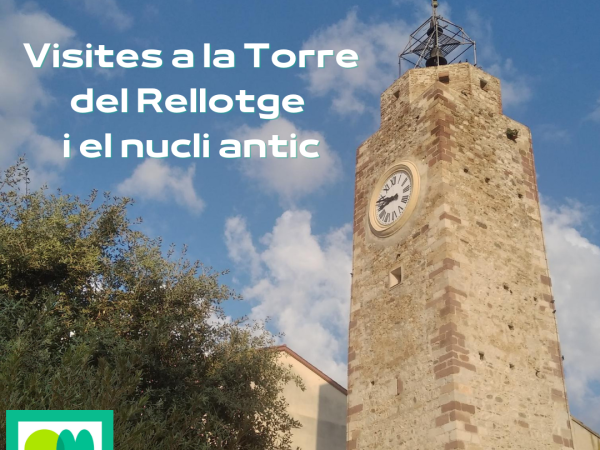
Torre del Rellotge
It is one of the most significant and representative elements of the municipality, classified as a Cultural Asset of National Interest. It has the characteristics of a defense tower and, in medieval times, it had been linked to a castle-type construction. It is located in Plaça Nova, in the old town, next to the parish church. Its current appearance and its height are the result of a reconstruction from the beginning of the 16th century. The plan is square and the walls slope in the shape of a truncated pyramid, very apparent at the base and almost imperceptible in height. At the top it is crowned by a low octagonal body with a wrought iron element that houses the two bells of the municipal clock. It housed the Olesa prison from the 18th century to the beginning of the 20th century. Despite being now the municipal clock tower, it is mistaken for the bell tower of the church, which was destroyed during the Spanish Civil War.
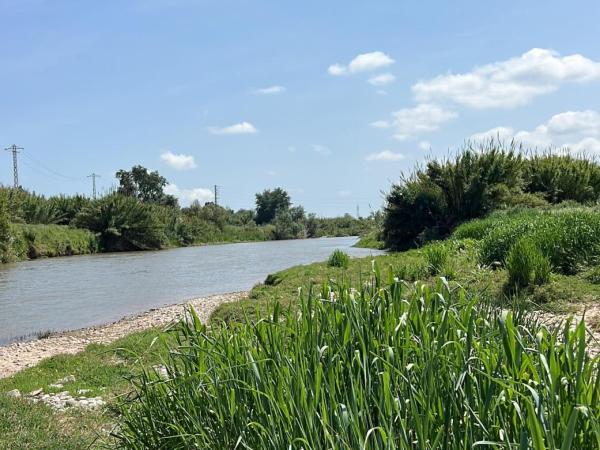
Eix del Riu
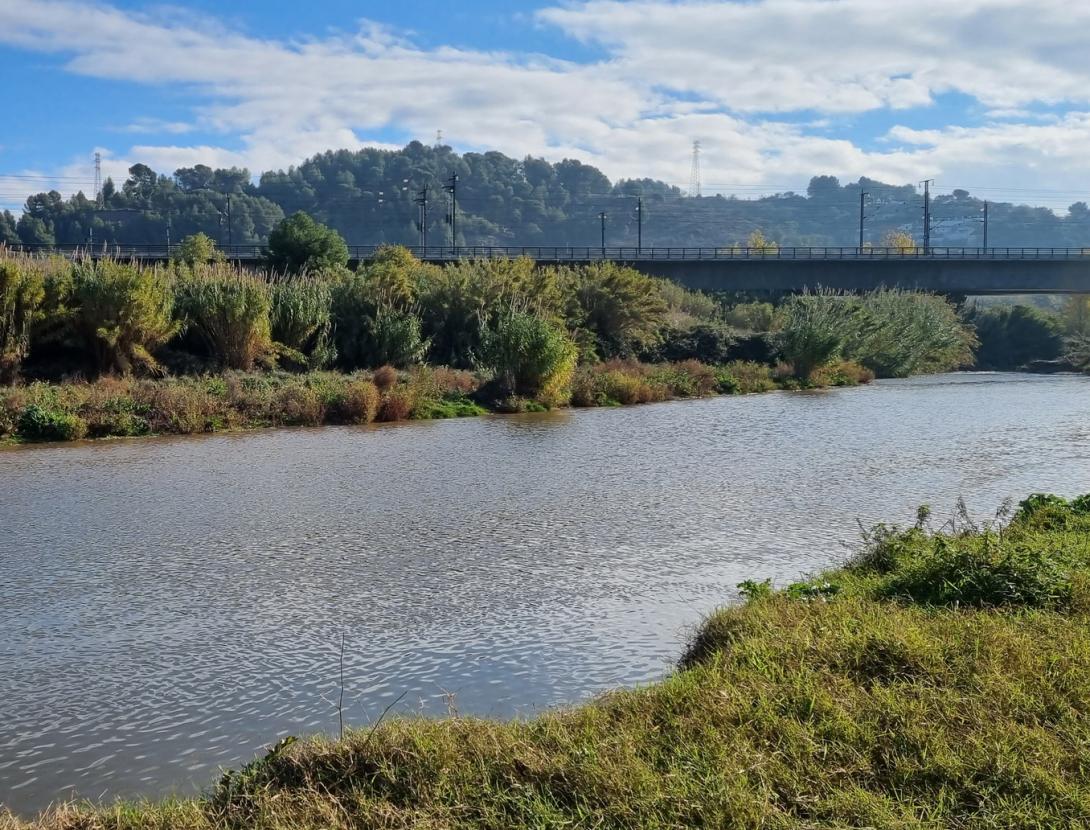
El riu Llobregat és un dels cursos fluvials més emblemàtics i importants de Catalunya. Al llarg dels segles, ha modelat el territori, ha influït en el desenvolupament de les comarques que travessa i s’ha convertit en un valuós espai natural ple de paisatges i racons per descobrir.
El Llobregat dona nom a la comarca del Baix Llobregat, ha estat escenari de nombrosos episodis històrics i ha tingut un paper estratègic des de l’antiguitat com a via de comunicació, font de recursos i motor de desenvolupament econòmic.
Neix a Castellar de n’Hug, a 1.295 metres d’altitud, i recorre prop de 170 quilòmetres fins a desembocar al mar Mediterrani, on alimenta el valuós Delta del Llobregat, un dels espais naturals més importants de Catalunya, amb aiguamolls d’una gran riquesa ecològica.
Al llarg del seu recorregut, el riu travessa paisatges molt diversos i conserva un important patrimoni històric i industrial. Hi destaquen elements tan singulars com el Pont del Diable, a Martorell, o la Colònia Güell, testimoni del passat industrial vinculat al tèxtil. Tot plegat configura un eix fluvial que ha donat vida i identitat als municipis que s’han desenvolupat al seu entorn.
A més, l’eix del riu Llobregat constitueix un corredor ecològic de gran valor, amb una notable diversitat de flora i fauna que contribueix a la conservació de la biodiversitat i al gaudi d’un entorn natural únic.
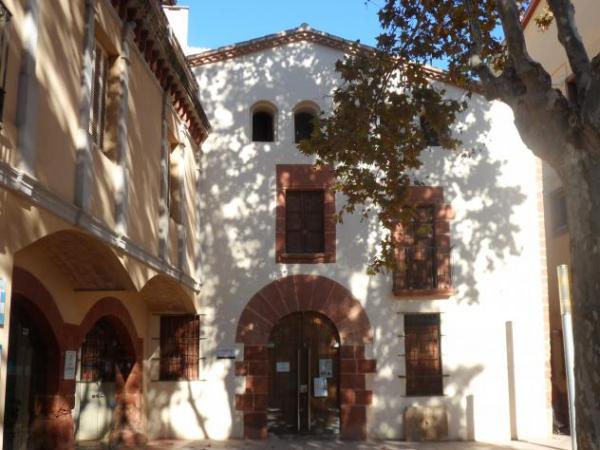
Museu Municipal de Pallejà
També conegut com a Masia Museu, es troba situat a Ca l'Albareda de la Plaça, una casa construïda el 1615. Exposa una notable selecció d'objectes antics d'ús quotidià, en un recorregut per les diverses estances, que es conserven com dos segles enrere.
El Masia Museu-Museu Municipal de Pallejà ocupa l'antiga Ca l'Albareda de la Plaça, una masia construïda el 1615 sobre les restes d'una casa anterior i que actualment se situa dins el nucli urbà de Pallejà. Visitar-lo permet descobrir la tradició agrícola d'aquesta població, que avui dia forma part del cinturó industrial de Barcelona.
Les dues plantes de la casa conserven les diverses estances tradicionals, com el menjador, la cuina i el celler, així com un dormitori, una habitació de costura i l'oratori. Estan perfectament ambientades en diverses èpoques, entre finals del segle XVIII i principis del segle XX. S'hi poden veure nombrosos objectes, estris i eines antics.
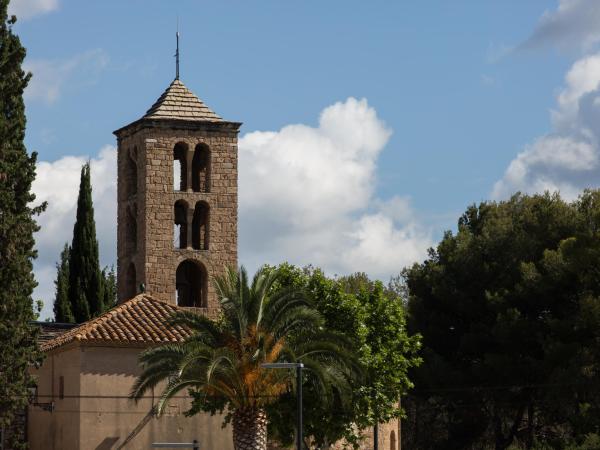
Església de Sant Pere d'Abrera
Church of the first Catalan Romanesque. Highlights include the Romanesque bell tower and presbytery, and the pre-Romanesque interior nave from the 10th-11th centuries. The building has a single floor plan and a tripartite head with three semicircular apses arranged in a cross.
Church first documented in 1110 and which is a harmonious example of the first Romanesque style in Catalonia. The building is a single floor plan and head of three elements with three semicircular apses arranged in a cross, which have three semicircular windows open to the wall. The apses generate three arches that rotate in a transept covered with an edge vault and the naves are covered with a barrel vault.
In the 12th century an extension was made which affected the walls of the nave and the entrance door to the side wall. This access consists of a semicircular archivolt sculpted with plant motifs.
Puig i Cadafalch speaks of this church as an example of a transfer between the temples that have a dome to those that do not.
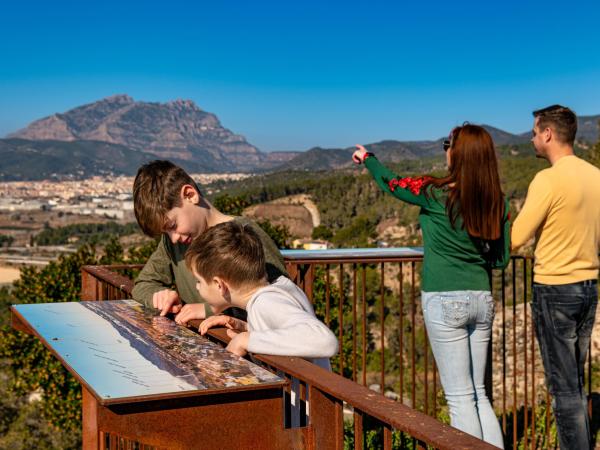
Els Set Balcons de Montserrat – Abrera
The Seven Balconies of Montserrat are seven natural and panoramic viewpoints of the magical mountain that contemplate it from Abrera, Castellví de Rosanes, Collbató, Esparreguera, Martorell, Olesa de Montserrat and Sant Esteve Sesrovires.
These viewpoints are the perfect place to enjoy nature and the activities that this northen area of Baix Llobregat offers, such as hiking, cycling or family tourism. At the same time, they allow you to enjoy gastronomy with native products, visits to wineries and cellars, a heritage that shows the past and the history of the territory, such as the Sedó Colony in Esparreguera or the Pont del Diable in Martorell, and unique events, such as the performances of the ''Passions'' during the spring.
More information about each balcony at www.setbalconsdemontserrat.cat
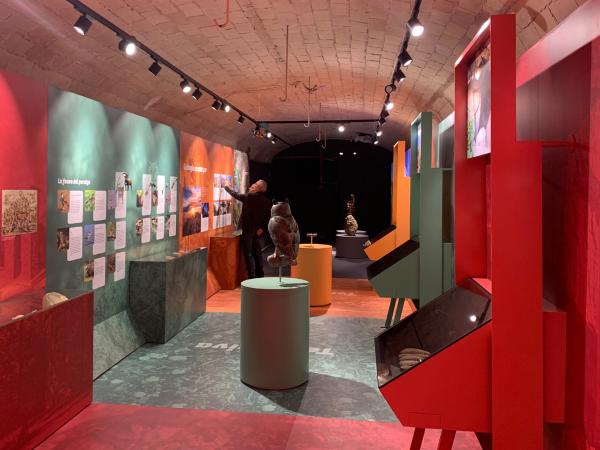
Cal Puigjaner - Espai Montserrat
Cal Puigjaner is an old manor house documented since 1548, although the architectural complex was completely renovated in the 19th century. On the main facade, the vaulted portal of the original building and a chapel with the image of Saint Peter stand out.
The cellar is a construction from the beginning of the 18th century, with the typical Catalan vault, which was made to absorb the growing and prosperous industry of wine and brandy production.
This cultural and tourist facility, renovated in 2021 and inaugurated in March 2023, houses within its facilities the Center for Culture and Nature of Montserrat, an ethnological and archaeological exhibition that explains in a very didactic way the formation geological history of the Montserrat Mountain and its natural heritage as well as the history of the people who populated this territory over the centuries.
Inside Cal Puigjaner, there is also the Espai Celler, a multipurpose room that offers the possibility of hosting a wide range of activities, as well as an exhibition hall; Espai Pati and Espai Cups.
Visita i berenar a les bodegues Finca Ca n'Estella
In the afternoon, the winery has a special air, there is more calm and tranquility ... The last rays of the afternoon sunlight illuminate all the most charming corners of the winery ... the magic begins ... Come and live the experience! Discover all the secrets of the winery and let history surprise you. We look forward to seeing you with a smile! Enjoy this experience just 25 minutes from Barcelona.
What does it include?
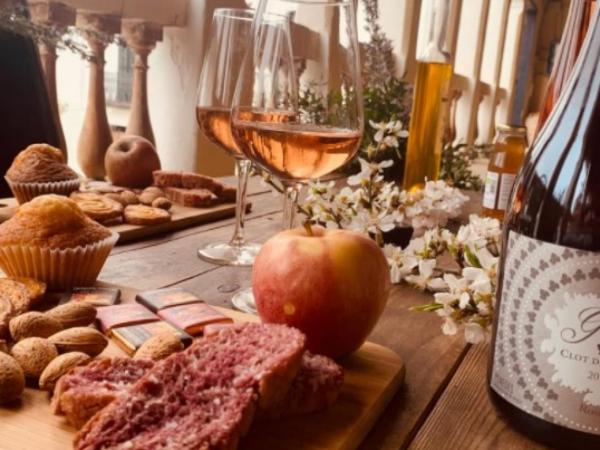
Guided tour of the vineyards and winery + wine tasting + snack (homemade pastries, Ametller chocolates, bread with Clot dels Oms wine and sugar, extra virgin olive oil from Ca n'Estella, organic fruit and almonds from the winery paths) .
Termes romanes
The Roman baths will be temporarily closed to carry out works to improve the equipment. Start of works: September 12, 2024. Forecast: 6 months
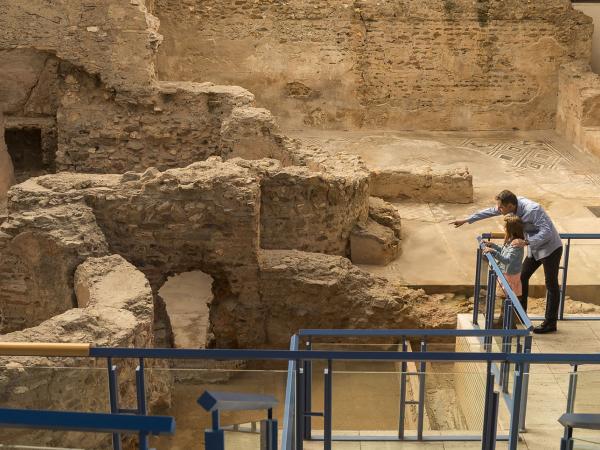
The Roman baths of Sant Boi are private vila baths under belonging to a Roman empire the best preserved in Catalonia.
Were built in the late second century AD., one of the greatest periods of economic splendor of the area through the production of wine, and ran until the fifth century
The baths were composed of two bodies parallel building. One contained the cold chambers and the other housed the hot chambers. Under the frigidarium there was also a production center of amphorae from the years 30 to 20s from the first century BC.
In the seventeenth century a house was built on top, allowing better preservation. In 1998 the Roman Baths were officially opened with the cover and the current appearance.
Palau Can Mercader
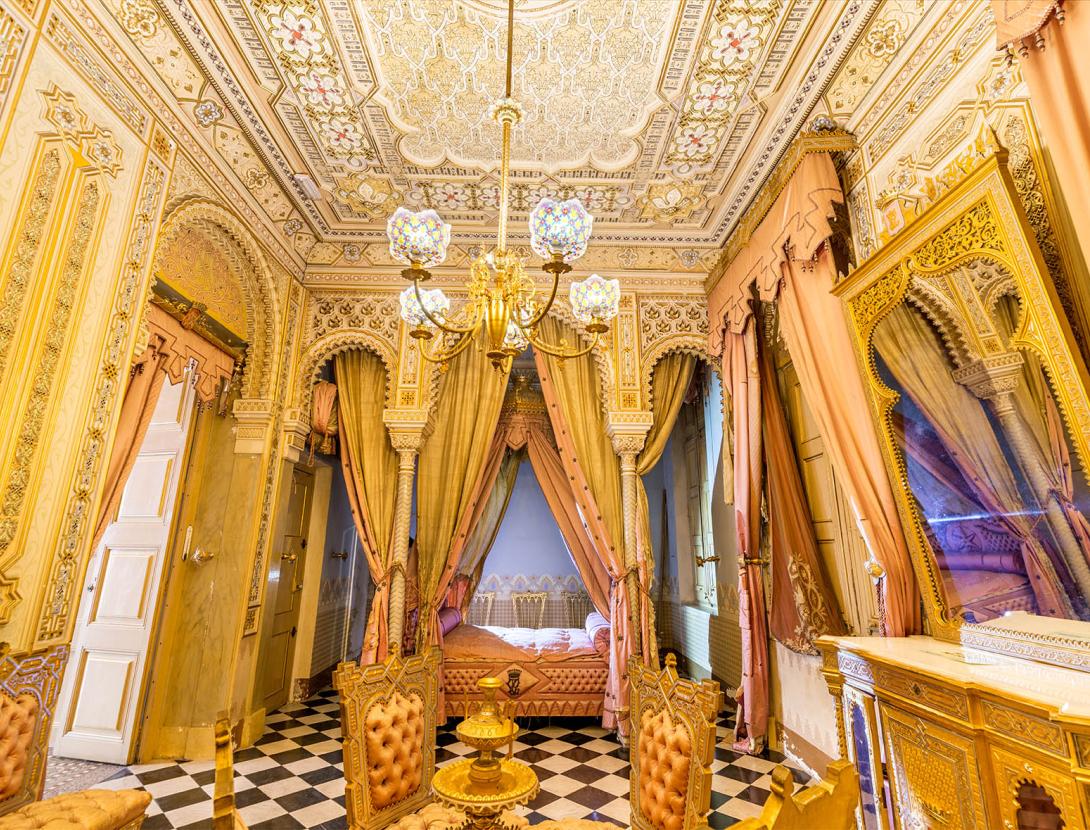
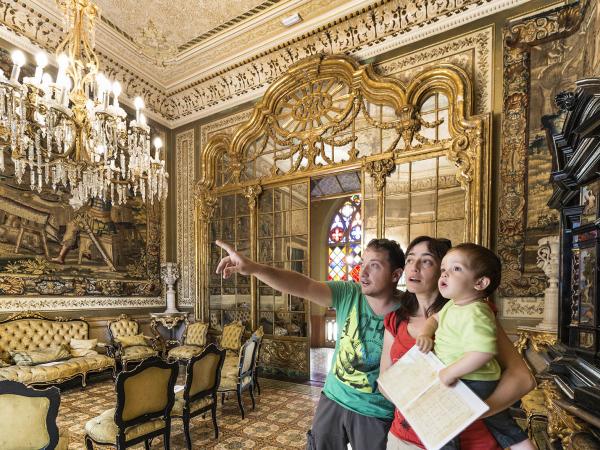
The Palau Mercader Museum is the exponent of lifestyle and cultural and artistic affinities of an aristocratic lineage of the last century. The museum is located on the main floor of the Palace and features more than 3,000 objects forming the "museum of the Earl of Bell·lloc".
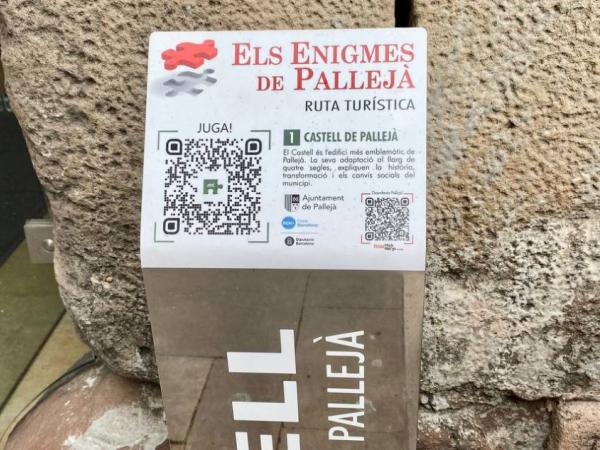
Ruta "Els enigmes de Pallejà"
The route "Els Enigmes de Pallejà" is an initiative of the Pallejà City Council to promote its magnificent architectural and historical heritage, while you can enjoy a fun activity to visit and get to know Pallejà.
A walk to learn about the heritage and history of the municipality
You can walk through its streets and buildings and solve the proposed puzzles with the information that you can capture on your mobile device using QR codes marked at each point.
The route begins at the Castle, and continues around the Plaça Major, the City Council building and the Plaça de les Masies area. Then, it continues through Can Daunis and Ca l'Obianc, to head towards Plaça de l'Estació, the church and, finally, ending at Ca n'Albareda. In each of these locations, an information totem has been installed with a QR code through which, with your mobile phone, you can participate in a game created with the aim of spreading all the details of the town's historical heritage.
During the route you will learn about historical events, such as those of the Peninsular War, or the history and transformation of Pallejà up to the present day.
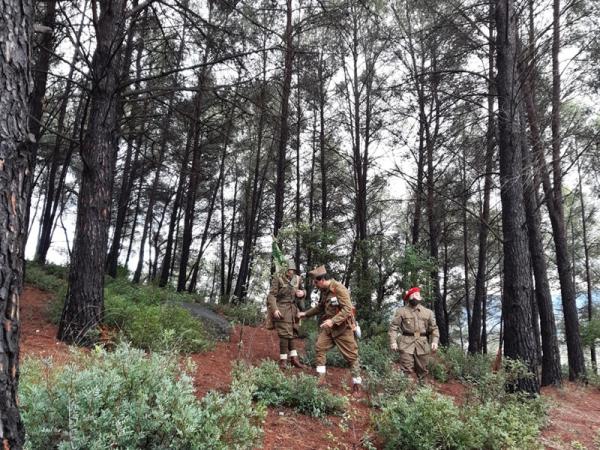
Jaciment de les Trinxeres de la Guerra Civil del bosc de Sant Miquel d'Abrera
History of the Yacimiento de las Trincheras de la Civil War in the forest of Sant Miquel de Abrera
This defensive complex, formed by several lines of trenches that go up the slope, four shelters attached to the trench located at the lowest level, and three machine gun nests scattered along the southern flank, must be framed in the last days of the Civil War Spanish (1936-1939), specifically, in the context of the so-called offensive of Catalonia, a military campaign ordered by the head of the rebel factional forces, General Franco, which took place between December 23, 1938 and February 13, 1939. This was the last great confrontation of the conflict, and sentence thus the defeat of the republican legality, which was no longer able to articulate any resistance. The objective of this operation was to destroy what was left of the army of the legitimate Government of the Republic, in retreat towards the north and Barcelona after the defeat in the Battle of the Ebro, and thus close the border with France to prevent the escape of people.
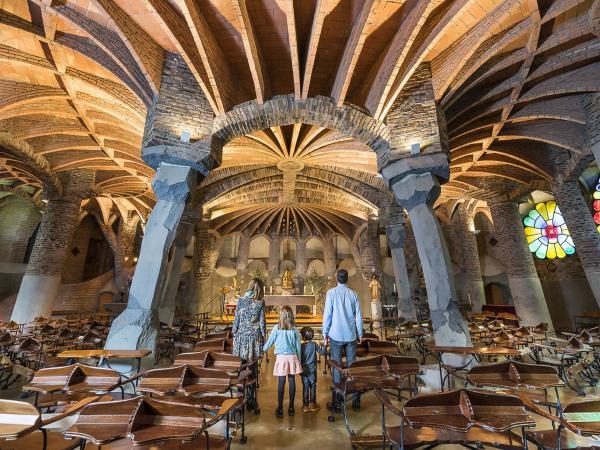
Cripta Gaudí de la Colònia Güell- Combinat Güell
The Gaudí Crypt which is located inside the Colonia Güell, a textile village packed with surprises just 20 minutes outside Barcelona. The Crypt is the church of twisted columns, the laboratory for the Sagrada Família and it was declared a World Heritage Site by UNESCO in 2005. You’ll be amazed at the Crypt, where the Catalan architect Antoni Gaudí experimented with many architectural solutions. In addition to Gaudí’s building, the Colonia Güell gives visitors the opportunity to explore its streets while admiring the most important Catalan art-nouveau, or modernista buildings in the life of the village, which are of great architectural interest. Also visit the Interpretation Centre inside the former workers’ cooperative. The centre has a permanent exhibit that provides the keys to understanding the village as a whole and the church in particular.
The guided tour of the Colonia Güell now includes a visit to "the garden of architectural remains". Located behind the crypt, the garden will exhibit elements that Gaudí planned to incorporate into the church but was never able to after construction was halted.
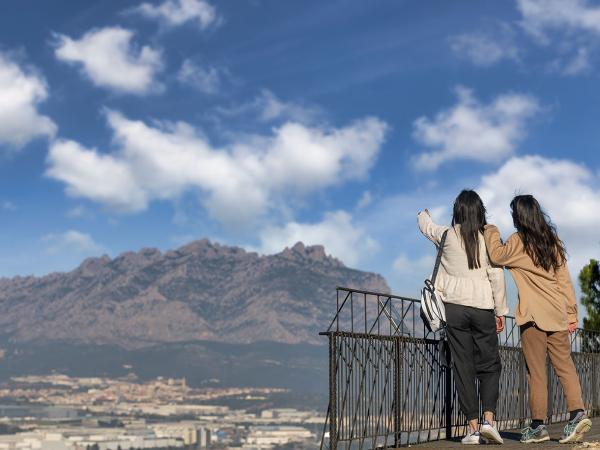
Els Set Balcons de Montserrat
The Seven Balconies of Montserrat are seven natural and panoramic viewpoints of the magical mountain that contemplate it from Abrera, Castellví de Rosanes, Collbató, Esparreguera, Martorell, Olesa de Montserrat and Sant Esteve Sesrovires.
These viewpoints are the perfect place to enjoy nature and the activities that this northen area of Baix Llobregat offers, such as hiking, cycling or family tourism. At the same time, they allow you to enjoy gastronomy with native products, visits to wineries and cellars, a heritage that shows the past and the history of the territory, such as the Sedó Colony in Esparreguera or the Pont del Diable in Martorell, and unique events, such as the performances of the ''Passions'' during the spring.
More information about each balcony at www.setbalconsdemontserrat.cat
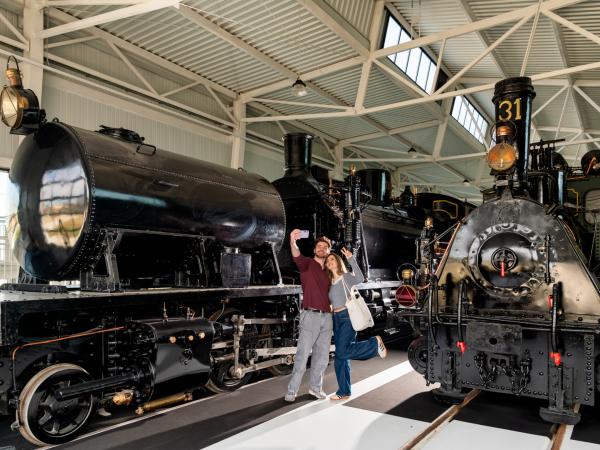
Espai de la Via Mètrica dels FGC
The Espai de la Via Mètrica is a museum that focuses on the history of the rail network known today as the Llobregat-Anoia Line. This museum is located in the vicinity of the Martorell-Central stations of Ferrocarrils de la Generalitat de Catalunya and Martorell-Central of ADIF and exhibits an extensive collection of historical vehicles that were previously scattered in various storage sites.
Throughout the tour scheduled for the visits, the groups will be guided and will receive explanations from specialized staff of Ferrocarrils de la Generalitat de Catalunya (FGC). The visitable space consists of historical pieces belonging to the company, own explanatory posters where the origin of the exhibited pieces, commemorative librettos and a permanent exhibition of FGC is explained. Access to the premises is adapted for strollers and people with reduced mobility, toilets, safety service and free parking.
The vehicles preserved in this space are listed as historical heritage and have been restored by Ferrocarrils.
- The guided tour lasts approximately 40 minutes.
- Guided tours led by FGC staff.
- Groups of up to 30 people.
- Accessible visits.
- Free admission.
- Suitable for all audiences. Minors must be accompanied by an adult.
The Metre Gauge Railway Heritage Space offers free guided tours on a regular basis. Advance booking is required: https://www.fgc.cat/patrimoni-fgc/visites-espais-fgc/
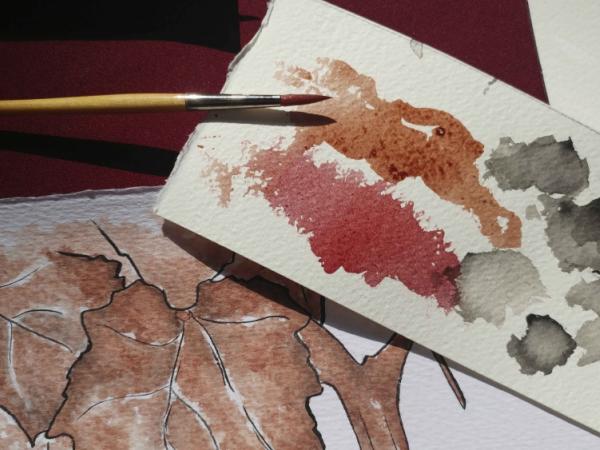
Tinta i Vi - Marta Arañó
Catalan artist from Barcelona, resident in Sant Esteve Sesrovires since 1991, where he also has his art studio. Specializing in the technique of Painting with Wine. My work is personalized for Cellers, painting exclusively with their own wines. The characteristics of the wines always accompany them wherever they are exposed. My work is also dedicated to Wine Lovers, giving them the opportunity to have their favorite wine transformed into another work of art, in this case transferred to a canvas or a sheet.
I do all the activities everywhere: in my own art studio, wineries, wine or gastronomy fairs, schools, institutes, libraries, civic centers, etc.
The study and its space
Surrounded by the landscape of the region in a quiet environment you will find exhibition and sale of Works of Art painted with Wine / Cava , Numbered reproductions of original works, Solidarity lamps and Crafts; all to make a unique and original gift. You will also find all the information of the DO del Penedès and the Baix Llobregat region as a Tourist Information Point. You can also enjoy the space by carrying out wine tourism activities.
The experience to paint with wine
We know the wines of the DO Penedès and the Baix Llobregat region from the Art side.
Wine painting workshops (the wine used in the children's workshops, does not contain alcohol), in the adult workshops they will be able to taste the wine with which they will paint. Workshops in a very quiet environment overlooking the region and for small groups. The activity includes a welcome drink, workshop, visit to the studio, projection of the environment and this new technique. it can also be completed with a brunch in the garden.
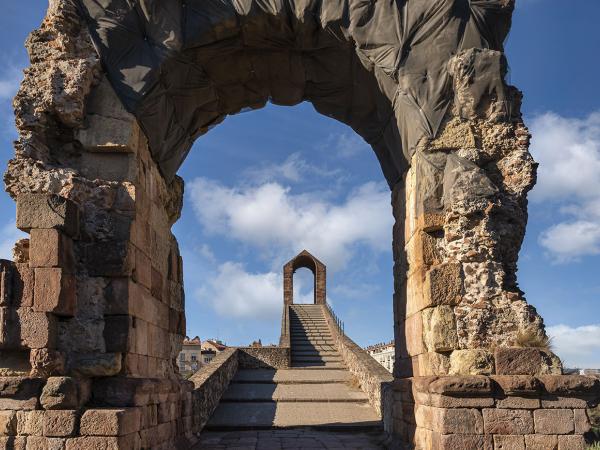
Pont del Diable
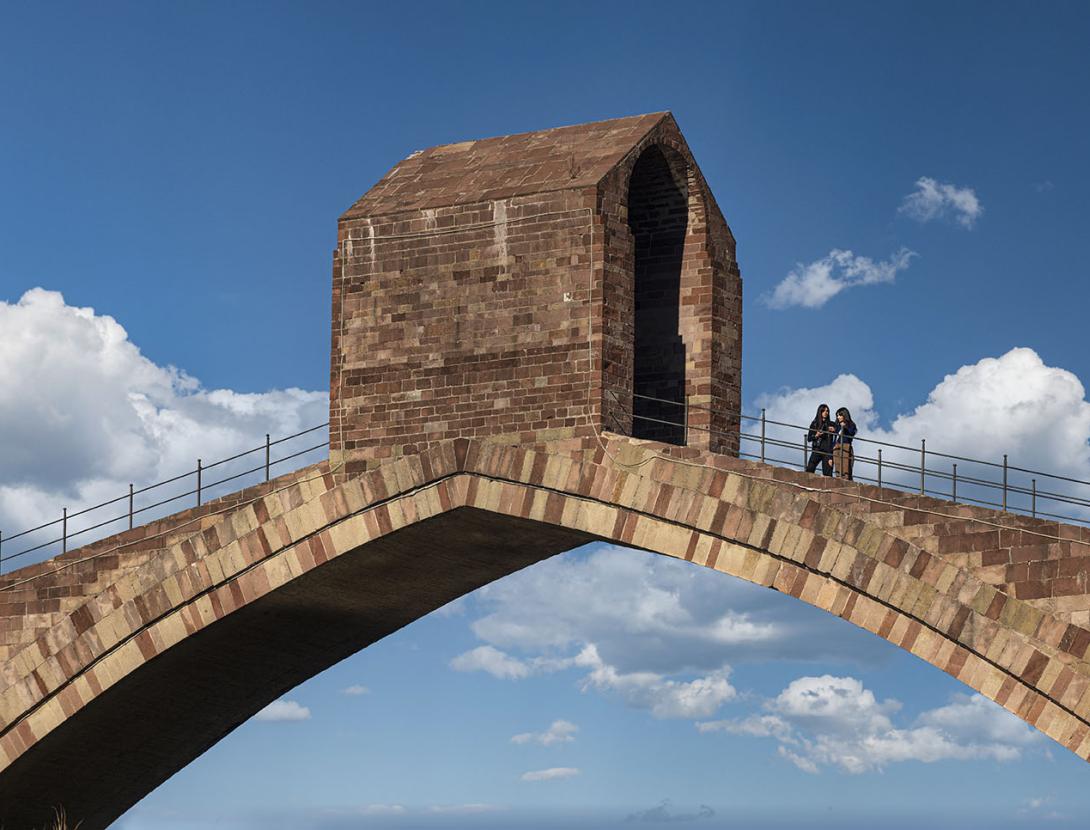
The Devil’s Bridge is one of the remains that are kept as evidence of the Roman road network in the low part of the Llobregat and Anoia rivers zone. It’s located at the Congost del Llobregat (gorge entrance) just after the confluence with the Anoia River. It was raised towards the year 10 B.C. by the Roman legions III (Macedonica), VI (Victrix) and X (Gemina), according to the identified marks shown in some stone blocks, just when the new Via Augusta (roman road) -as a result of the foundation of the Iulia Augusta Paterna Faventia Barcino (Barcelone)- was carried out, at the end of the 1st century B.C. The bridge arch is this period most important proof which has been kept until now. The date of destruction of the Roman Bridge is ignored but we know for certain that, in 1283 the process of construction a gothic style new bridge, with a similar appearance to the present one was started. The bridge reconstruction, also called de Sant Bartomeu –because of the Romanesque chapel close to it – or stone bridge, was a great work and with the aim of building the bridge, money was collected and taxes prevailed for long. The road network transformation development, mainly from the XVIII century, caused numerous interventions on the bridge work and its surroundings, like the construction of the Headquarters of Cavalry. The bridge was blown up by the Republican Army when the soldiers were retreating nearly at the end of the Spanish Civil War. The works of reconstruction of the central Gothic arch began in 1961. The demolition of the houses affixed to the bridge end brought to light some remains of the Roman bridge wall and the old municipal slaughter house (1990), as well as the location of the Saint Bartomeu chapel archaeological remains.
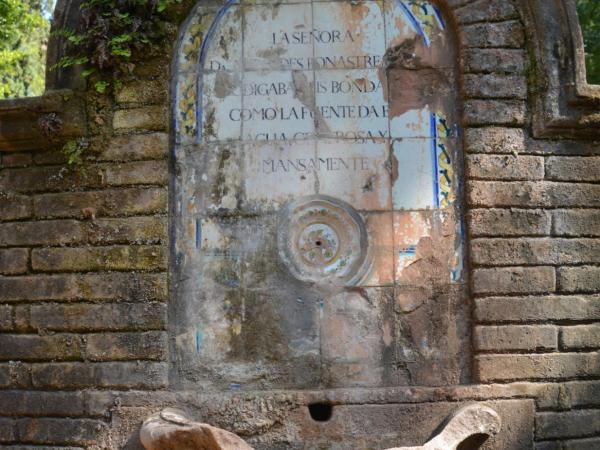
Font del Carinyo
The Font del Carinyo in the municipality of Pallejà is a unique natural environment for walking and has been a meeting point for the people of Pallejà since the 20th century. Its history is linked to the marriage of the former owners of the estate, Mr. Seix and Mercè, because this fountain is a gift that Mr. Seix gave to his wife to improve her health.
It is part of the old romantic garden of Can Seix, with a large pond 10 m in diameter and 1.5 m deep. It is not a natural spring, since the water flows from the tanks that the Seix family had built to collect the water that flows from the Presa de l'Aigua, at the top of the Toscos stream, in the Les Rovires sector, another point of natural interest.
In the pond, water lilies and yellow lilies can still be found, which contribute to the reproduction of a large number of species, such as the tree frog, the green frog, the toad, or the salamander. Dragonflies and other aquatic invertebrates can also be easily seen.
The fountain is part of the pond and emerges from its contour. The front wall is made of exposed brick, rounded at the top. In the middle there is a ceramic tile panel, very worn and damaged by the passage of time, where, in addition to the name of the fountain, this phrase could be read: "La Sra. Mercedes Bonastre que prodigaba bondad como la fuente da el agua que fluye mansamente". Below, there is a semicircular stone basin that collected the water. Today, part of it is missing, and the spout through which the water flowed has disappeared, and only the hole remains.
The environment is ideal for walking surrounded by plane trees, and it is also a space where several species of birds are still found, such as the grey flycatcher, the greenfinch, the blackbird, the raspinell, the green woodpecker, the great tit, or the red-footed sparrow.
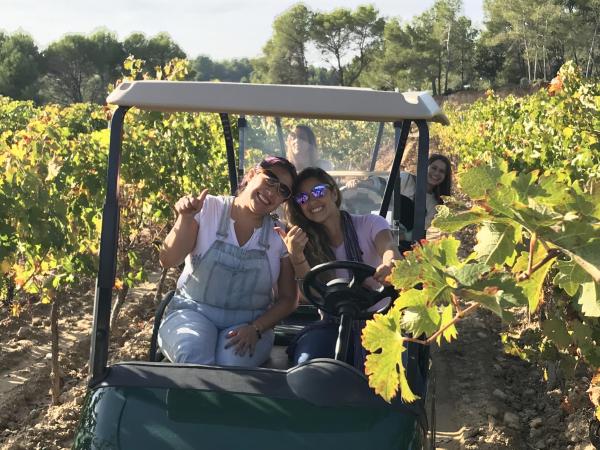
Buggy Vinya i tast al celler Can Casals
Come and discover the world of the vineyard and wine through a walk through the vineyards with an electric buggy driven by you. We will also go to the winery to learn about the winemaking techniques and finally we will have a snack to taste the wines that we make in Can Casals.
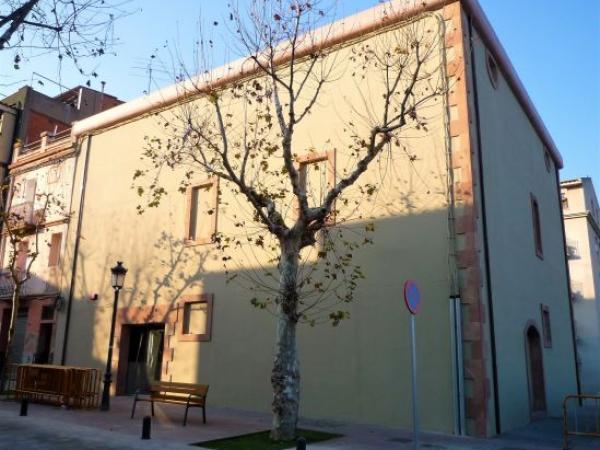
Centre d'Interpretació del Patrimoni Històric "La Caserna"
Located in the renovated building of the old Cavalry Barracks of Martorell (1732), the Center for the Interpretation of Historical Heritage "La Caserna" (CIPH), hosts temporary exhibitions of photography, art, history, science and others. cultural themes and is part, with the Devil's Bridge and the hermitage of Sant Bartomeu, of the heritage and historical ensemble of the town. On the ground floor of the building are the figures of the Colla de Gegants and the Colla de Capgrossos, as well as the beasts of the Colla de Diables i Dracs de Martorell. In the upper floors there are different school workshops of the didactic service of Museums of Martorell, as well as temporary exhibitions.
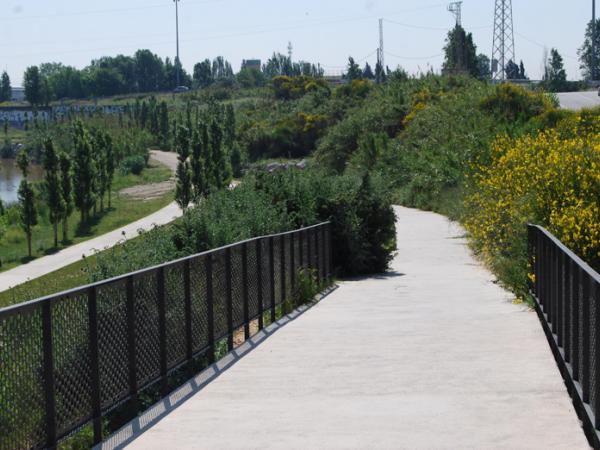
Parc fluvial de Sant Boi
The Sant Boi River Park retrieves for the citizens a large space formerly occupied by former illegal gardens located very close to the urban center of Sant Boi de Llobregat.
In fact, the case of Sant Boi de Llobregat was paradigmatic since, until recently, this important municipality of more than 82,000 inhabitants lived completely behind the river due to the fact that access to the river space was virtually impossible for them pedestrian if it was not the basis of long and dangerous routes. The new access pass to the Llobregat river draws the routes of the Generalitat de Catalunya Railways and flies over the Canal de la Dreta del Llobregat and the crowded BV-2002, thus creating a comfortable route that leaves the river space with little 250 meters from the town hall and the city center.
In short, a 3 hectare fluvial park has been recovered where plantations of different species of riverside vegetation have been carried out. In total, more than 200 trees, including willows, poplars, ash trees, poplars and figs. There are also more than a thousand aquatic plants, shrubs such as lawns and vineyards such as hauri
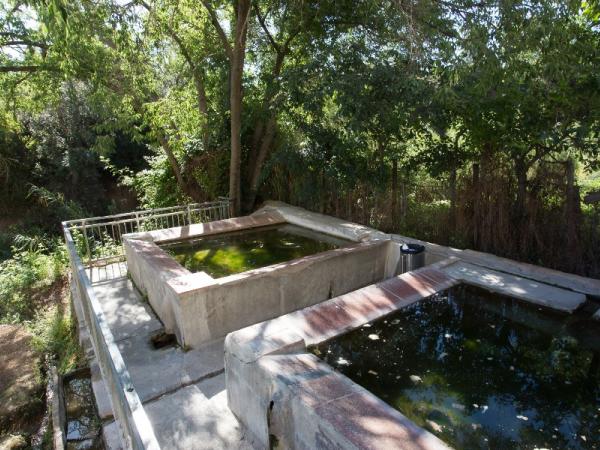
Els safareigs públics d'Abrera
The public washrooms are located on the emblematic Carrer de la Font. Carrer de la Font was a narrow street, built only on the side opposite the Gran torrent and with gardens in the plots in front of each house. At the entrance to the street, on the lower part, a path led to the Gran fountain, also called the Abrera fountain or, simply, the Fountain.
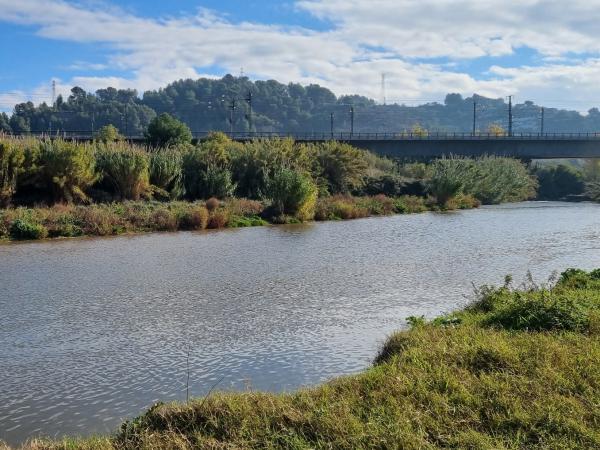
Parc Fluvial de Pallejà
The Llobregat River Park in the municipality of Pallejà is helping to gradually recover the riverside ecosystem and has also allowed the gradual recovery of the link between the Llobregat River and the inhabitants of Pallejà.
The Llobregat River, as it passes through Pallejà, is in its lower section, before its mouth. Around this section lies the main alluvial plain of Catalonia, the Llobregat Delta, some 98 km² of high interest for the diversity of water birds, since the delta is in the middle of the Western Mediterranean migratory route.
The population has always had an important link with the river. Decades ago, it was common to see entire families spending their afternoons by the river and having their meals there in contact with nature.
A visit to this natural space, so close to the urban centre, allows you to enjoy a walk, do sports, or observe numerous species of birds on the riverbed. The river space now constitutes an area for leisure and for practicing sports and is also an unbeatable setting for learning about an important part of the natural environment of our municipality.
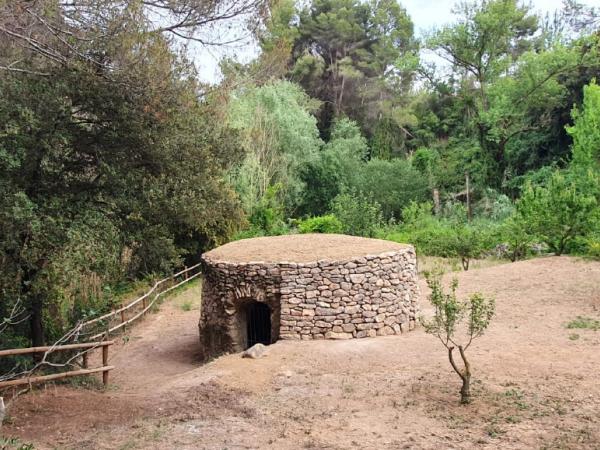
El pou de glaç d'en Margarit
The Margarit ice well (coordinates 41°30'52.7"N 1°53'24.2"E) is one of the most relevant historical, monumental, cultural and ethnological treasures of the town of Abrera and the Baix Llobregat region. It is located in a privileged location, in an area of natural interest such as the Torrente Grande de Abrera. It is publicly owned and was declared a Cultural Asset of Local Interest (BCIL) in May 2021. With its potential as a source of knowledge about our past, it makes it an element that should be protected and preserved.
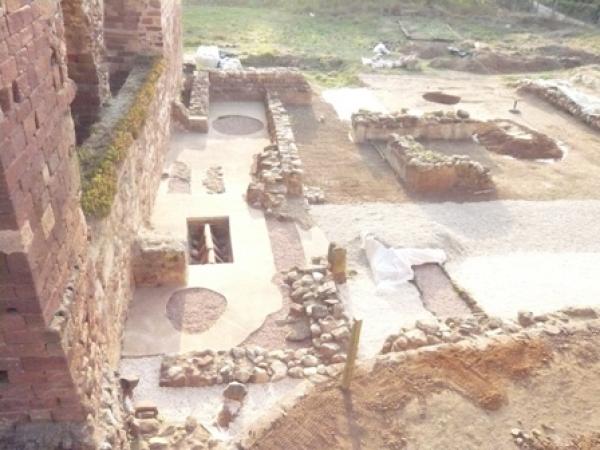
Jaciment Arqueològic de Santa Margarida
On the plains of Anoia you can find the Santa Margarida archaeological site, which is structured around a roman church dating back to the end of the twelfth century, and a sixteenth century farm. The land, along with the old Sant Genís de Rocafort monastery, was handed over to the town by their owner, Pau Sendrós, in 1967. He hoped that it would be devoted to archaeological investigation. In 1972 the Centre d’ Estudis Martorellencs began this work. Since 1981, the project has been integrated into the investigation programmes of the Prehistoric, Ancient History and Archaeology departments at the University of Barcelona. Santa Margarida presents an extensive and continuous historic sequence, which is still in its early stages of study and spans from the tenth century to the present day. The key characterising elements of all of them are: a Roman church dating back to the end of the 12th Century built on the remains of early Christian churches from the 10th Century; a necropolis which covers a wide timeline from the 10th century to the 18th,; a collection of pits localised to the inside and outside of the church built in the first half of the 11th a collection of structures associated with the church, directly or indirectly linked, whose functions were funeral, religious or of habit, and a 17th century and a farm built on an 16th century structure with some elements present of the 14th century. Part of the site has been installed in a museum and you can visit the inside of the farm in an exposition.
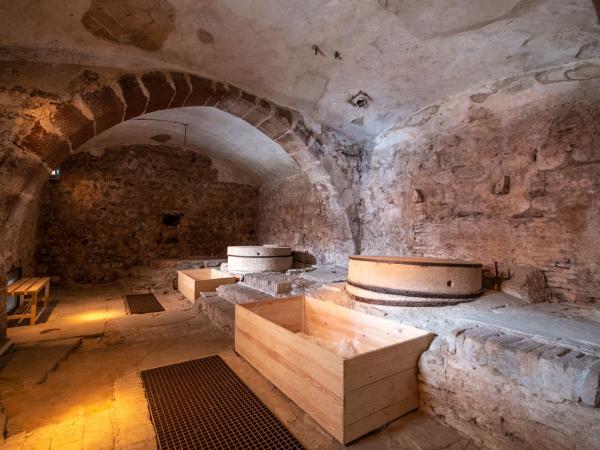
Molí dels Frares
The Friars flour mill is one of the most historic buildings in Sant Vicenç dels Horts. Of medieval origin, the monastery of Sant Pau del Camp bought it in 1370 and associated the name. At the time, the mill had three grinding wheels. At the beginning of the 16th century, the mill came under the protection of Fernando el Católico. After a brief period of dependence on the Montserrat monastery (1583-1723), it was transferred to the Sant Pau monastery, at which time the relief of the saint was placed on the semicircular arch of the entrance portal.
With the confiscation of the ecclesiastical assets of the s. XIX, the State sold it at auction in 1877 to Antoni Xuriguer Andario, a Barcelonan house. From this moment on, changes of ownership are frequent until it ends up in the hands of the Sant Vicenç City Council, already in a contemporary stage. In this second modern stage the mill was active with only two grinding wheels.
The structure of the building is the classic one of a hydraulic mill, which is largely preserved. The area of the grinding wheels remains buried under the farmhouse, where two Gothic vaults guard two of the grinding wheels (lower and upper) and a modern iron riser. The three water outlet arches of the carcabans and the large pond in the southern sector also stand out.
The mills are not a strange building in the landscape of Sant Vicenç and, although now only the Molí dels Frares is preserved, they were common in the Llobregat river beds and in the Torrelles and Cervelló streams.
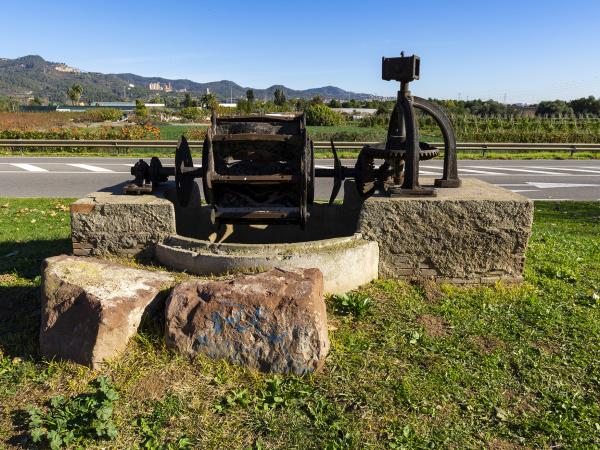
Ruta pels Punts d'Interès Local
The route of the Points of Local Interest presents a set of spaces with history in the municipality of Sant Vicenç dels Horts. Distributed throughout the geography of the municipality, you can find different proposals to better understand the town of Sant Vicenç dels Horts and the people who have lived there for centuries. On this route you will be able to get to know the spaces of homage and social recognition, which show a lively and dynamic city that has been able to adapt to the changes and social transformations of the different eras.
More information about the Points of Local Interest here.
Castell de Cornellà
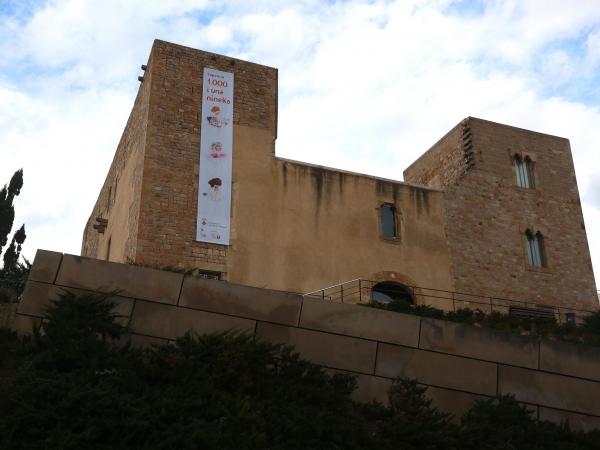
Cornellà Castle is one of the emblematic buildings of the city. It is a large Gothic mansion, built and renovated at various times. It is strategically located on top of a small hill, dominating the Centro neighborhood, from which you have a good view of the Llobregat in its final section, of Sant Boi on the other bank of the river and, in the past, of the main access roads to the city. Acquired and renovated by the Cornellà City Council, since 2000 it has housed various municipal offices such as the Department of Cultural Heritage, an exhibition hall, the Municipal Historical Archive, and the central courtyard where cultural and civic activities are held.
Els Set Balcons de Montserrat – Olesa
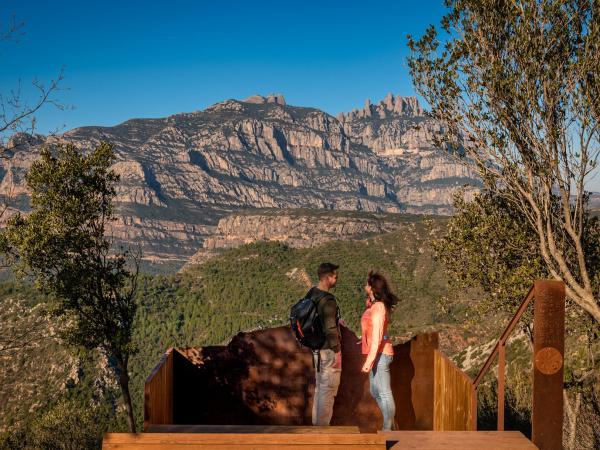
The Seven Balconies of Montserrat are seven natural and panoramic viewpoints of the magical mountain that contemplate it from Abrera, Castellví de Rosanes, Collbató, Esparreguera, Martorell, Olesa de Montserrat and Sant Esteve Sesrovires.
These viewpoints are the perfect place to enjoy nature and the activities that this northen area of Baix Llobregat offers, such as hiking, cycling or family tourism. At the same time, they allow you to enjoy gastronomy with native products, visits to wineries and cellars, a heritage that shows the past and the history of the territory, such as the Sedó Colony in Esparreguera or the Pont del Diable in Martorell, and unique events, such as the performances of the ''Passions'' during the spring.
More information about each balcony at www.setbalconsdemontserrat.cat
Parc de la Solana
Service information
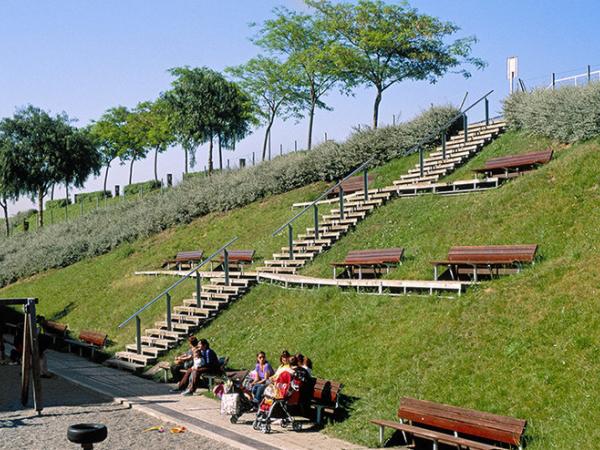
Singular vegetation, panoramic view, drinking water fountains, children's games, soccer goalkeepers, basketball baskets, dogs area, parking lot.
Inauguration: 2005
Surface area: 2,5 ha.
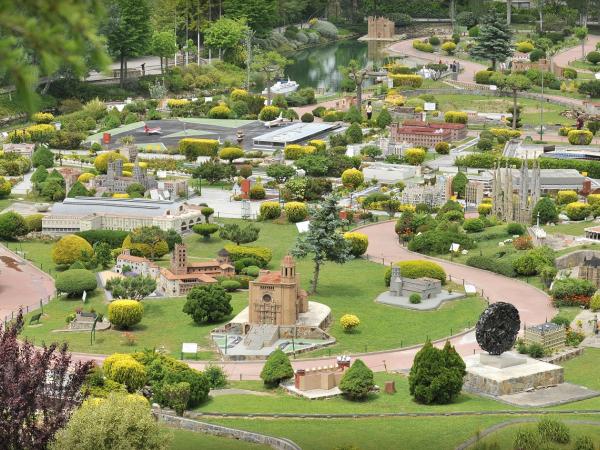
Bitllet Combinat Catalunya en Miniatura
Get to discover the miniature model theme park, one of the largest in the world with an open-air exhibition of the most emblematic monuments and buildings in Catalonia. The alternative you were looking for to spend a different and original day!
Take advantage and also discover Catalonia in Miniature ADVENTURE, an authentic adventure activity at the height of the trees, between zip lines, lianas, catwalks and many other surprises. A place where young and old can get lost in the trees, climb a pine trunk or hang from zip lines. More than 66 activities among the trees are waiting for you divided into 4 adventure circuits with different levels of difficulty to be carried out independently under the supervision of specialized instructors.
Both to spend a full day and to take advantage of your leisure time, you will find a space in the middle of nature, close to Barcelona, where you can enjoy a wide range of restaurants and entertainment, where the possibilities for fun are endless.
Come with all the comfort of the train and the bus in Catalonia in Miniature:
COMBINED TICKET:
Adults: 16 € // Children: 12 € (Under 13 years old)
The price includes:
. Train trip to Sant Vicenç dels Horts. From any FGC station
. Transfer by bus to Torrelles de Llobregat. To the park gate
. Entrance to Catalonia in Miniature. Includes model circuit.
Tickets can be purchased at all the vending machines at the FGC stations on the Llobregat / Anoia line, with a connection to Pl. España.
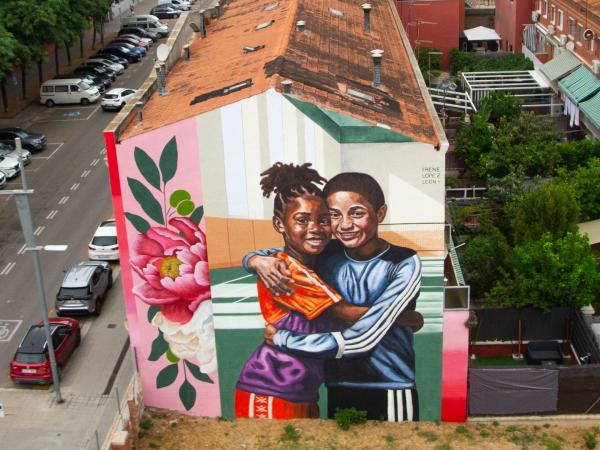
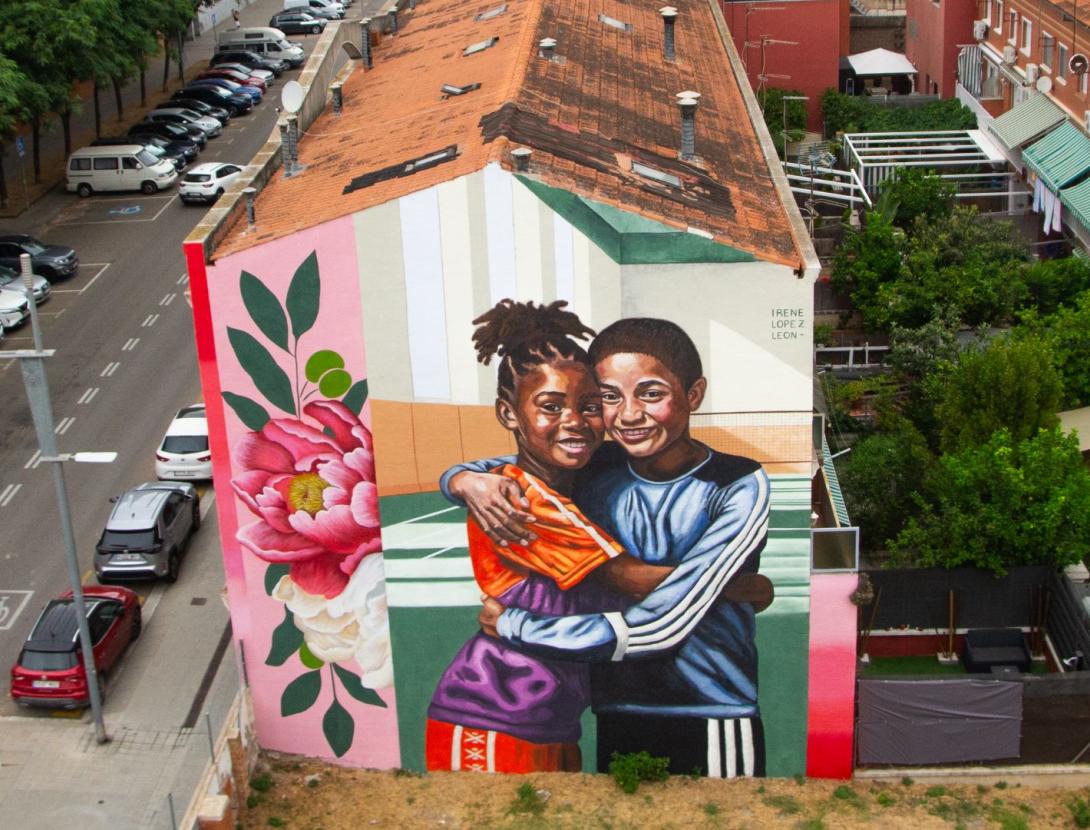
Ruta dels murals Kromàtic
The Lladonosa Space in Sant Vicenç dels Horts is an exhibition and activity facility around Catalan cuisine and based on the work that the chef Josep Lladonosa has bequeathed to the Sant Vicenç dels Horts Town Hall. The Espacio Lladonosa is located at the Virginia Amposta Cultural Center and Civic Center and consists of a permanent exhibition area, and a kitchen classroom where gastronomic activities are carried out with traditional Catalan cuisine and the contributions made by chef Lladonosa as their axis.
PERMANENT EXHIBITION The permanent exhibition area is organized in two surroundings. One part is dedicated to explaining the identity, tools and origins of Catalan cuisine and is interactive and technological with audiovisuals and touch screens. Next, the visitor will find a more scenic part, focused on explaining the life and work of Josep Lladonosa and showing his legacy.
SCHEDULE OF ACTIVITIES The Espacio Lladonosa consists of a kitchen classroom where training activities in the gastronomic field related to traditional Catalan cuisine and the contributions and updates made by chef Josep Lladonosa are systematically scheduled throughout the year.. There will be activities for professional cooks and activities for the general public.
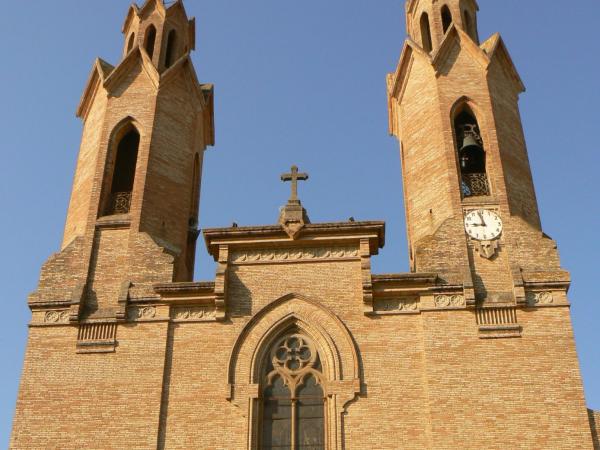
Església Parroquial de Sant Esteve Sesrovires
Begun in 1889 and blessed on November 13, 1891 during the time of rector Pau Costas, it replaced a previous building from the 17th century, it is the result of several attempts to build a new church in the town, all previous projects were discarded due to difficulties economic Most of the population participated in this work by contributing money or wages. Built following a rather eclectic mixed neo-Gothic and neo-Romanesque style, with neo-medieval lines, it is the work of the architect Josep Domènech i Estapà. It consists of a larger and higher central nave and two side naves with chapels; the building with transept, semicircular apse and two bell towers flanking the main door to the north. It adopts solutions from the Romanesque tradition (apse and transept) and also from the Gothic (pointed arches, buttresses).
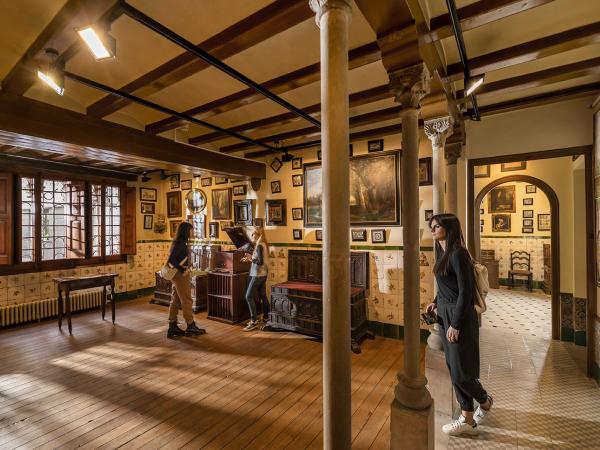
L'Enrajolada, Casa Museu Santacana
The museum was founded in 1876 by Francesc Santacana Campmany (1810-1896), an example of romantic idealism which drove its creator to collect artefacts from palaces and old religious buildings, (mainly from Barcelona, Martorell and their surrounding areas in his house to try to recover their original function. He also put together a collection of his own paintings and those of other artists he met while he was studying La Llotja (Free School of Fine Arts of Barcelona), and with many others who he was in touch later on in time, such as: Pau, Lluís and Agustí Rigalt, Marià Fortuny, Damià Campeny, Claudi Lorenzale, Pelegrí Clavé, Ramón Vives, Ramón Martí Alsina, Francesc Torrescassana, Joaquim Vayreda, ”Natzarena” school representatives or prestigious landscape painters. His work was continued by his grandson, Francesc Santacana Romeu (1883-1936), who named the house L’Enrajolada because of the great number of tiles (rajoles) the museum contained. It is one of the oldest museums in Catalonia and a great example of 19th century collections. It was much visited by travellers at that time as can be seen by the many written testimonies. Guided visits allow 21st century visitors to fully appreciate the spirit of the founder whilst passing through the different rooms filled with diverse objects from diverse places, including floor and wall tiles, ceramic works, drawings, engravings, architectural and sculptural elements, furniture and decorative objects. L’Enrajolada also houses the ceramic collection of the scholar and soldier Lluís Faraudo of Saint-Germain (1867-1957).
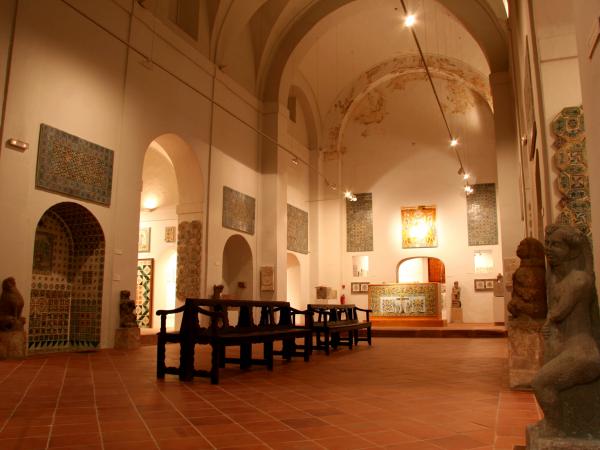
Museu Vicenç Ros
The Vicenç Ros Museum was founded by Vicenç Ros Batllevell (1883-1970) in 1945 and occupies some of the quarters of the old Capucin monastery in Martorell. The museum allows the visitor to contemplate its collections whilst also visiting the old monastery structure, one of the few surviving examples of Capucin architecture from 17th century in Catalonia. The most important part of the museum is Vicenç Ros’ collection of ceramics along with the one from the well known Catalan artist Joaquim Mir. Of all the pieces on display, the great sets of ceramic Catalan tiles mostly of religious interest, such as l’Aparició de la Verge de la Mercè de Llorenç Passoles (17th century), Sant Isidre Llaurador by Miquel la Puja ( at the end of the 17th century), the fifteen Misteris del Rosari (17th century) should be highlighted. The soffit with Hunting scenes from the 17th century is also excellent and the composition of La batalla dels gats i les rates (The Battle of Cats and Rats), an allegory made about 1642 of the Pergpignan siege (1642) during the Thirty Years’ War. The museum also has a large and varied collection of paintings relating to Saints and Virgins with an iconographic and chronological repertoire from 17th to 19th centuries. It is important to emphasize the set of architectural elements taken from different buildings in the same town and from many other places; works of art and paintings by Lluís and Agustí Rigalt amongst others and also the ethnological collection, which includes everything from a combination of impressive wine barrels to tools and utensils from different workshops and traditional trades, such as: chair makers barrel makers riding gear and saddle makers, potter, espadrille maker, carpenter etc.